 5 Courses
Successful projects begin with a solid plan. In this course, you'll learn the foundational principles, frameworks, and terminology that effective project managers use to initiate, plan, and manage projects across industries.
Professor Linda Nozick, Director of Civil and Environmental Engineering at Cornell, introduces practical tools for defining project scope, breaking complex work into manageable tasks, developing project schedules, and establishing realistic timelines and resource plans. Through hands-on exercises, you'll build the skills needed to organize, track, and manage projects with greater confidence.
Whether you're new to project management or preparing for future PMP® certification, this course provides a strong foundation in the concepts and practices that support successful project delivery.
Note: This course uses Microsoft Excel (with the free Solver add-in) for selected exercises. No specialized project management software is required.
- Nov 25, 2026
- Dec 9, 2026
- Dec 23, 2026
- Jan 6, 2027
- Jan 20, 2027
- Feb 3, 2027
- Feb 17, 2027
Research shows that a high percentage of projects take significantly longer than expected and cost more than anticipated. Moreover, if you ask people for an estimate of how long a task will take them to complete, their estimate will usually be overly optimistic.
Sometimes, if you bring in extra people to help with a task, that actually slows down progress instead of accelerating it. Why is this so? And what can you do about it? In this course, from Linda K. Nozick, Director and Professor of Civil and Environmental Engineering at Cornell, you will examine these questions. Students will identify strategies to integrate resource availability constraints into project planning, scheduling, and control.
This course is designed for project managers who seek better practical results for aligning available resources with tasks and bringing activities to completion on time. Students will examine compression strategies for bringing a project that's running late back on track and will explore how to handle common types of project creep, such as handling customer requests that require extra time, and working with team members who decide independently to invest extra effort in a task.
This course combines a focus on formal project management mechanisms with an emphasis on the human element: what can project managers do to resolve issues brought about in the normal course of working with customers, team members, and stakeholders?
You are required to have completed the following course or have equivalent experience before taking this course:
- Organizing the Project and Its Components
- Oct 28, 2026
- Nov 11, 2026
- Nov 25, 2026
- Dec 9, 2026
- Dec 23, 2026
- Jan 6, 2027
- Jan 20, 2027
Risk management is a key function in project management. Project managers should be able to apply a variety of risk-management tools in their work, including performing risk identification, quantification, response, monitoring, and control.
In this course from Professor and Director of Civil and Environmental Engineering Linda K. Nozick, you will examine the nature and types of project risk and learn to apply specific mitigation strategies.
You'll have an opportunity to analyze a past project you've worked on and assess what the risks might have been and why. Then you'll analyze the outcomes: Did the known risks come to fruition? What were the leading indicators? What could they have done for contingency planning at the beginning? By asking these questions, you'll then be able to perform several calculations to compute the probability that a project will finish on time.
You are required to have completed the following courses or have equivalent experience before taking this course:
- Organizing the Project and Its Components
- Planning and Managing Resources
- Oct 28, 2026
- Nov 11, 2026
- Nov 25, 2026
- Dec 9, 2026
- Dec 23, 2026
- Jan 6, 2027
- Jan 20, 2027
Successful project managers don't wait until a project is complete to evaluate performance—they monitor progress throughout the project lifecycle to identify issues early and make informed decisions. Earned Value Management (EVM) is a proven framework for measuring project performance, forecasting outcomes, and keeping projects on track.
In this course, Professor Linda Nozick, Director of Civil and Environmental Engineering at Cornell, introduces the principles and practical application of EVM. You'll learn how to measure project performance against scope, schedule, and budget, interpret key performance metrics, forecast project outcomes, and determine when corrective action is needed to improve project success.
Through practical examples and exercises, you'll build the confidence to use EVM as a decision-making tool that supports stronger project controls and more effective communication with project stakeholders.
Students will be most successful if they have a foundational understanding of project planning concepts, including project schedules, budgets, work breakdown structures, and project networks.
You are required to have completed the following courses or have equivalent experience before taking this course:
- Organizing the Project and Its Components
- Planning and Managing Resources
- Assessing, Managing, and Mitigating Project Risk
- Oct 28, 2026
- Nov 11, 2026
- Nov 25, 2026
- Dec 9, 2026
- Dec 23, 2026
- Jan 6, 2027
- Jan 20, 2027
In traditional project management, we tend to make assumptions: the customer knows precisely what they want, or the team's workflow and tasks will go according to plan and in sequence.
Practically speaking, this is rarely the case. Sometimes the customer doesn't know what they need until they see an early iteration of your team's work and can provide feedback. Because of this, work is usually done incrementally. We must build flexibility, even agility, into the model in order to succeed.
This course is designed for project managers who want to get better practical results with adaptive approaches to projects. Students in this course will be most successful if they have a foundational understanding of traditional project management tools and processes including project networks, budgets and schedules.
You are required to have completed the following courses or have equivalent experience before taking this course:
- Organizing the Project and Its Components
- Planning and Managing Resources
- Assessing, Managing, and Mitigating Project Risk
- Using Earned Value Management for Project Managers
- Oct 28, 2026
- Nov 11, 2026
- Nov 25, 2026
- Dec 9, 2026
- Dec 23, 2026
- Jan 6, 2027
- Jan 20, 2027
Symposium sessions feature two days of live, highly interactive virtual Zoom sessions that will explore today's most pressing topics. The Project Management Symposium offers you a unique opportunity to engage in real-time conversations with peers and experts from the Cornell community and beyond. Using the context of your own experiences, you will take part in reflections and small-group discussions to build on the skills and knowledge you have gained from your courses.
Join us for the next Symposium, in which we'll share experiences from across industries, inspiring dialogue around best practices, innovation, and the future of project management. You will support your coursework through discussion and application of your knowledge, exploring pressing challenges and trends. By participating in relevant and engaging conversations with eCornell classmates, you will discover a variety of perspectives and build connections.
All sessions are held on Zoom.
Future dates are subject to change. You may participate in as many sessions as you wish. Attending Symposium sessions is not required to successfully complete any certificate program. Once enrolled in your courses, you will receive information about upcoming events. Accessibility accommodations will be available upon request.
eCornell online Workshops are live, interactive learning experiences lasting 1 to 4 hours and led by Cornell faculty experts. These premium, short-format sessions focus on AI topics and are designed for busy professionals who want to gain immediately applicable skills and strategic perspectives. Workshops may include faculty presentations, breakout discussions, and guided hands-on practice.
The AI Workshops All-Access Pass provides you with unlimited participation for 6 months from your date of purchase. Whether you choose to attend one Workshop per month or several per week, the All-Access Pass allows you to customize your AI journey and stay on top of the latest AI trends.
Hosted by Cornell faculty at the forefront of their fields, Workshops cover a range of cutting-edge AI topics applicable across industries. Workshops are offered at three levels to allow you to choose topics that match your experience.
- AI Foundations
- These Workshops introduce core AI concepts, terminology, capabilities, limitations, and practical applications. No prior AI experience is required.
- Best for: Beginners, AI-curious professionals, and teams starting their AI journey.
- AI in Practice
- These Workshops focus on practical skills, workflows, and strategies that help participants use AI more effectively in their day-to-day work. Some familiarity with AI tools is recommended.
- Best for: Professionals who have experimented with AI and want to build confidence and capability.
- AI Leadership and Transformation
- These advanced Workshops explore emerging technologies, strategic implementation, governance, organizational impact, and specialized applications. AI fluency is expected, and some Workshops may have prerequisites.
- Best for: AI leaders, transformation teams, executives, and advanced practitioners.
Earning the Project Management Professional (PMP®) certification demonstrates a high standard of project management knowledge and professional expertise. This facilitator-led study group is designed to help you reinforce the concepts covered throughout the Project Management Certificate and prepare confidently for the PMP certification exam.
Through live online sessions, you'll review key PMBOK® Guide concepts, work through guided practice exams, and engage in collaborative discussions with fellow professionals preparing for certification. Your facilitator will provide personalized guidance, clarify challenging topics, and share proven exam preparation strategies to help you strengthen your readiness for exam day.
By combining structured review, practice exams, and expert instruction, this study group helps you deepen your understanding of project management principles and approach the PMP certification exam with confidence.
Required study materials
- A Guide to the Project Management Body of Knowledge (PMBOK), 8th Edition. Project Management Institute.
- Agile Practice Guide, 2nd Edition. Project Management Institute.
- Rita Mulcahy's PMP Exam Prep, 12th Edition. Rita Mulcahy, PMP.
- Nov 11, 2026
- Dec 9, 2026
- Jan 6, 2027
- Feb 3, 2027
- Mar 3, 2027
- Mar 31, 2027
- Apr 28, 2027
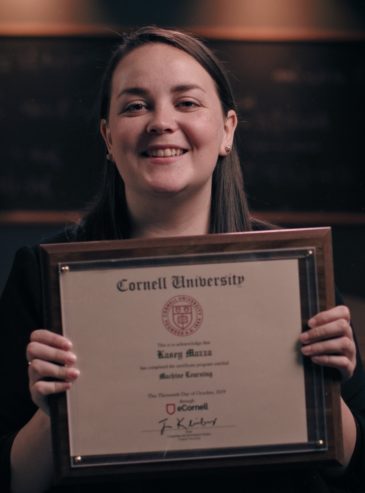

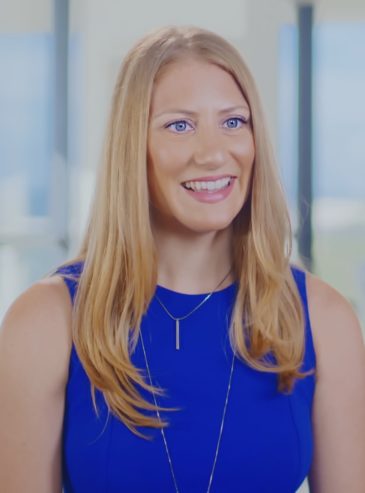

eCornell was truly one of the best investments I made in my entire career and it’s what brought me to where I am now.