
 7 Courses
- Oct 14, 2026
- Nov 11, 2026
- Dec 9, 2026
- Jan 6, 2027
- Feb 3, 2027
- Mar 3, 2027
- Mar 31, 2027
As real estate asset manager, you are steward of an owner's property, responsible for managing it to help achieve the owner's goals and increase its value. To guide you in this challenging role, you need a comprehensive road map for decision making: the Asset Management Strategic Plan. This course focuses on teaching you how to build this strategic plan and on developing your understanding of the asset manager role, its activities, and different management approaches. Beyond best practices and expert insights, this course also provides you with ample opportunities to practice new skills and an applied toolkit for real-world real estate asset management.
You are required to have completed the following course or have equivalent experience before taking this course:
- Leading Successful Property Management Operations
- Oct 28, 2026
- Nov 25, 2026
- Dec 23, 2026
- Jan 20, 2027
- Feb 17, 2027
- Mar 17, 2027
- Apr 14, 2027
Within the commercial real estate industry, it is vital to develop a deep understanding of an asset's condition as well as the market in which it competes. There are several strategies for optimizing your occupancy and lease rates through an evaluation of the competitive landscape. This critical look at your market environment will enable you to best position your real estate assets in terms of lease structures, leasing trends, term expectations, and much more.
This course has been designed to simulate the way in which asset managers, along with those working in leasing departments, gather information and develop a leasing strategy. You will create a leasing strategy to convey the pertinent data about an asset and the market landscape to a particular audience. This course will train your eye to scan a property for key indicators of physical and financial health. Using a variety of downloadable tools, you will determine how to gather data for analysis that will provide insight and inform decision making for every step of the cycle of tenancy.
- Nov 11, 2026
- Jan 6, 2027
- Mar 3, 2027
- Apr 28, 2027
- Jun 23, 2027
- Aug 18, 2027
- Oct 13, 2027
In commercial real estate, managing the upkeep of the physical asset is critical for multiple reasons, including occupant safety, meeting legal occupancy requirements, functionality of systems, efficiencies of systems, productivity of occupants, maintaining asset value, and more. Successfully optimizing the functionality of a building requires a strategic approach to maintenance activities and equipment selection, as well as continually seeking new technologies, devices, and practices to improve building performance and reduce departmental expenses. In this course, you will access important building management strategies and best practices, professional expert interviews, and exercises that bring various strategies to light.
This course has been designed to simulate the way in which asset managers, building managers, and other stakeholders gather, analyze, and use various forms of building maintenance information to make decisions. Throughout this course, you will develop a robust tool kit of skills and resources to deal with property management issues including labor, code, financial management, and renovations. As you build your knowledge and skills in facilities management, you will be able to offer valuable recommendations and ask pertinent questions that will improve any asset's physical functionality and enhance the business's financial performance.
- Sep 30, 2026
- Nov 25, 2026
- Jan 20, 2027
- Mar 17, 2027
- May 12, 2027
- Jul 7, 2027
- Sep 1, 2027
- Oct 14, 2026
- Dec 9, 2026
- Feb 3, 2027
- Mar 31, 2027
- May 26, 2027
- Jul 21, 2027
- Sep 15, 2027
Large buildings are some of the leading consumers of resources such as raw materials, electricity, and water. They also generate an incredible amount of waste. Customers and potential lessees now expect asset management to be transparent in their deployment of sustainable practices. On the flip side of this expectation, it has never been easier to make, measure, and communicate improvement in the area of sustainable operation. In this course, you will discover the importance of depth, clarity, and transparency when developing a sustainability strategy. You will then determine how to align your everyday efficiency goals with your overall sustainability strategy through environmental policies and practices, as well as the products you choose.
Taking it a step further, you will investigate the popular “green” certification standards and the options available for new development projects and existing buildings. You will make on-site observations of a LEED-certified building and explore the criteria making the LEED and Green Globes programs the international benchmarks for green building design and operation.
Beyond building design, there are valuable opportunities to empower and encourage your employees and/or residents to adopt sustainable practices by establishing a “green team” within your building or company. This team usually includes individuals passionate about sustainability and preserving the environment, so they will often be happy to help ensure your sustainability goals are met, in turn having a positive effect on waste reduction and, thus, your bottom line.
- Oct 28, 2026
- Dec 23, 2026
- Feb 17, 2027
- Apr 14, 2027
- Jun 9, 2027
- Aug 4, 2027
- Sep 29, 2027
eCornell Online Workshops are live, interactive 3-hour learning experiences led by Cornell faculty experts. These premium short-format sessions focus on AI topics and are designed for busy professionals who want to gain immediately applicable skills and strategic perspectives. Workshops include faculty presentations, breakout discussions, and guided hands-on practice.
The AI Workshops All-Access Pass provides you with unlimited participation for 6 months from your date of purchase. Whether you choose to attend one workshop per month, or several per week, the All-Access Pass will allow you to customize your AI journey and stay on top of the latest AI trends.
Workshops cover a range of cutting-edge AI topics applicable across industries, hosted by Cornell faculty at the forefront of their fields. Whether you are just getting started with AI, seeking to build your AI skillset, or exploring advanced applications of AI, Workshops will provide you with an action-oriented learning experience for immediate application in your career. Sample Workshops include:
- Work Smarter with AI Agents: Individual and Team Effectiveness
- Leading AI Transformation: Bigger Than You Imagine, Harder Than You Expect
- Using AI at Work: Practical Choices and Better Results
- Search & Discoverability in the Era of AI
- Don't Just Prompt AI - Govern it
- AI-Powered Product Manager
- Leverage AI and Human Connection to Lead through Uncertainty
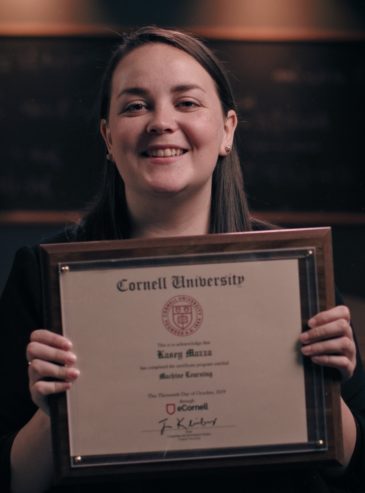


eCornell was truly one of the best investments I made in my entire career and it’s what brought me to where I am now.