

Alex Susskind is a Professor of Food and Beverage Management and is currently serving as the Associate Dean for Academic Affairs. Professor Susskind earned his Ph.D. in Communication from Michigan State University with a specialization in organizational communication and his MBA with a concentration in personnel and human relations. He earned his undergraduate degree at Purdue University in Restaurant, Hotel, and Institutional Management and is also a trained chef with a degree in Culinary Arts from The Culinary Institute of America in Hyde Park, New York. Prior to starting his career in academia, Professor Susskind was a chef and restaurant operator for both independent and multi-unit restaurant companies in the Northeastern and Southeastern United States.

Food and Beverage ManagementCornell Certificate Program
Request More Info
Overview and Courses
In this certificate program, you’ll learn key concepts, strategies, and practical skills necessary for managing, owning, and operating a successful restaurant, bar, or other food and beverage business.
Develop confidence in your ability to manage your business’s finances and learn key operational functions like menu design, income statement analysis, pricing, margin analysis, supply chain management, guest service processes, and employee engagement and performance.
This program includes two years of free access to Symposium! These events feature several days of live, highly participatory virtual Zoom sessions with Cornell faculty and experts to explore the Hospitality industry’s most pressing topics. Symposium events are held several times throughout the year. Once enrolled in your program, you will receive information about upcoming events.
Throughout the year, you may participate in as many sessions as you wish. Attending Symposium sessions is not required to successfully complete the certificate program.
For the best experience in this program it is recommended to take these courses in the order that they appear.
Course list
Amid the swirl of activity in food and beverage service, financial management is a function that loses priority sometimes, despite its crucial function.
Understanding and managing your food and beverage operation's income statement (profit and loss statement) can lead to better decision making and can position you to succeed. Learn how to get a hold on your organization's finances and make informed decisions based on profit and performance.
- Aug 5, 2026
- Sep 2, 2026
- Sep 30, 2026
- Oct 28, 2026
- Nov 25, 2026
- Dec 23, 2026
- Jan 20, 2027
Your menu does much more than inform guests about what you offer. It helps to create and communicate your food and beverage operation's identity, and influences your guests' choices.
This course will enable you to evaluate menus and identify changes that will optimize the value and profitability of your food and beverage operation.
- Aug 19, 2026
- Sep 16, 2026
- Oct 14, 2026
- Nov 11, 2026
- Dec 9, 2026
- Jan 6, 2027
- Feb 3, 2027
Your operation's brand is like a contract with the customer, and the expectation is that value will be delivered in relative accordance with price and quality of service. But keeping food costs down is no easy task. In fact, it's one of the most detail-oriented, scientific processes that go into running a restaurant and there are many challenges with keeping food costs controlled.
In this course, you'll learn to optimize your operation's profits by effectively managing your selection, procurement, receiving, storage, and inventory management processes.
- Aug 5, 2026
- Sep 2, 2026
- Sep 30, 2026
- Oct 28, 2026
- Nov 25, 2026
- Dec 23, 2026
- Jan 20, 2027
Loyal repeat customers are key to the success of any food and beverage operation. They represent recurring revenue and are a great source for feedback and gauging customer sentiment. They can also be your greatest evangelists, recommending you to friends and colleagues, even giving favorable online reviews.
Through careful design, meticulous attention to service processes, and a way to gauge customer sentiment, you can play to your team's strengths and identify opportunities for improving the guest experience to grow your business.
- Aug 19, 2026
- Sep 2, 2026
- Sep 16, 2026
- Sep 30, 2026
- Oct 14, 2026
- Oct 28, 2026
- Nov 11, 2026
Your employees are the heart of every food and beverage operation and your most valuable resource, yet so many operators fail to focus attention on employee satisfaction and engagement.
Understanding your role in managing and leading employees can help you to reduce costly turnover, safety incidents, theft, and absenteeism, and can improve your operation's quality, productivity, guest satisfaction, and profitability.
- Aug 5, 2026
- Sep 2, 2026
- Sep 30, 2026
- Oct 28, 2026
- Nov 25, 2026
- Dec 23, 2026
- Jan 20, 2027
Symposium sessions feature two days of live, highly interactive virtual Zoom sessions that will explore today's most pressing topics. The Hospitality Symposium offers you a unique opportunity to engage in real-time conversations with peers and experts from the Cornell community and beyond. Using the context of your own experiences, you will take part in reflections and small-group discussions to build on the skills and knowledge you have gained from your courses.
Join us for the next Symposium, in which we'll discuss how both day-to-day operations and strategic goal setting in the hospitality sector have rapidly evolved over the past two years, opening up new space for real-time conversations about the future of the industry. You will support your coursework by applying your knowledge and experiences to various areas of the industry, examining the innovations and accommodations you have all had to make throughout the COVID-19 pandemic and strategizing on future directions. By participating in relevant and engaging discussions, you will discover a variety of perspectives and build connections with your fellow participants from across the industry.
All sessions are held on Zoom.
Future dates are subject to change. You may participate in as many sessions as you wish. Attending Symposium sessions is not required to successfully complete any certificate program. Once enrolled in your courses, you will receive information about upcoming events. Accessibility accommodations will be available upon request.
Symposium sessions feature two days of live, highly interactive virtual Zoom sessions that will explore today's most pressing topics. The AI Symposium offers you a unique opportunity to engage in real-time conversations with peers and experts from the Cornell community and beyond. Using the context of your own experiences, you will take part in reflections and small-group discussions to build on the skills and knowledge you have gained from your courses.
Join us for the next Symposium, in which we'll share experiences from across the industry, inspiring real-time conversations about best practices, innovation, and the future of AI. You will support your coursework by applying your knowledge and experiences to some of the most pressing topics and trends in the field. By participating in relevant and engaging discussions, you will discover a variety of perspectives and build connections with your fellow participants from across a variety of industries.
All sessions are held on Zoom.
Future dates are subject to change. You may participate in as many sessions as you wish. Attending Symposium sessions is not required to successfully complete any certificate program. Once enrolled in your courses, you will receive information about upcoming events. Accessibility accommodations will be available upon request.
eCornell Online Workshops are live, interactive 3-hour learning experiences led by Cornell faculty experts. These premium short-format sessions focus on AI topics and are designed for busy professionals who want to gain immediately applicable skills and strategic perspectives. Workshops include faculty presentations, breakout discussions, and guided hands-on practice.
The AI Workshops All-Access Pass provides you with unlimited participation for 6 months from your date of purchase. Whether you choose to attend one workshop per month, or several per week, the All-Access Pass will allow you to customize your AI journey and stay on top of the latest AI trends.
Workshops cover a range of cutting-edge AI topics applicable across industries, hosted by Cornell faculty at the forefront of their fields. Whether you are just getting started with AI, seeking to build your AI skillset, or exploring advanced applications of AI, Workshops will provide you with an action-oriented learning experience for immediate application in your career. Sample Workshops include:
- Work Smarter with AI Agents: Individual and Team Effectiveness
- Leading AI Transformation: Bigger Than You Imagine, Harder Than You Expect
- Using AI at Work: Practical Choices and Better Results
- Search & Discoverability in the Era of AI
- Don't Just Prompt AI - Govern it
- AI-Powered Product Manager
- Leverage AI and Human Connection to Lead through Uncertainty
Whether you are a restaurant, coffee house, even a cocktail bar, your beverage program can have a big impact on your profitability, but it comes with a good deal of risk.
Understanding everything that is involved in offering wine, beer, spirits, and nonalcoholic beverages and applying discipline to your product selection, pricing, list design, and rigorous controls can minimize certain risks and position you for financial success.
- Aug 19, 2026
- Oct 14, 2026
- Dec 9, 2026
- Feb 3, 2027
- Mar 31, 2027
- May 26, 2027
- Aug 19, 2026
- Oct 14, 2026
- Dec 9, 2026
- Feb 3, 2027
- Mar 31, 2027
- May 26, 2027
- Sep 16, 2026
- Feb 3, 2027
- Apr 14, 2027
- Jun 23, 2027
Request more Info by completing the form below.
How It Works
Faculty Authors
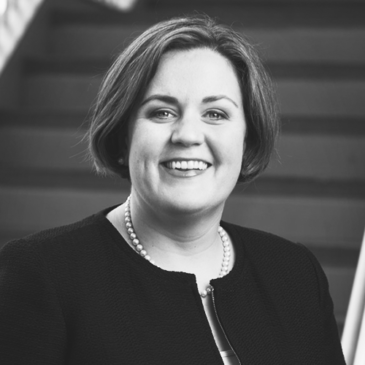
Cheryl Stanley is a Senior Lecturer in food and beverage management at the Nolan School of Hotel Administration, Cornell University. She has been involved with food since the age of ten, when she started her own chocolate business, Cheryl’s Chocolates. Following her interest in food, Ms Stanley attended the School of Hotel Administration and graduated in 2000.
While at Cornell, Ms. Stanley discovered her passion for beverages through the courses “Introduction to Wines,” “Food and Wine Pairing,” and “Beverage Management.” Upon graduation, she continued this enthusiasm for beverages and food service in both hotel and restaurant operations on the West Coast, where she worked for the Four Seasons Hotel in Newport Beach and the Wine Cask in Santa Barbara.
Continuing her entrepreneurial journey, Ms. Stanley started her own restaurant consulting company specializing in beverages and service in 2008. During this time, she was also presented an opportunity to become an adjunct instructor at the Culinary Institute of America (CIA), where she taught courses that included gastronomy, food, wine, and (agri)culture. Falling in love with teaching, Ms. Stanley decided to pursue her Master’s degree in hospitality and retail management from Texas Tech University. Heading back north, she returned to CIA prior to joining the food and beverage operations area back at her alma mater.
Ms. Stanley teaches courses on specific elements within the field of food and beverage operations, including “Introduction to Wines,” “Catering and Special Events,” and “Beverage Management.” She combines theoretical education with practical operational applications.
Certified through multiple wine organizations, Ms. Stanley has conducted research on beverage costing in hotels, bars, and restaurants, as well as hospitality education, and she has presented at beverage-related conferences. In 2015, she was awarded the Ted Teng ’79 Dean’s Teaching Excellence Award. Ms. Stanley is a member of the Society of Wine Educators and the United States Bartenders’ Guild. She is the faculty advisor for Cornell Cuvée, the blind wine tasting competition team, which has won first place at multiple international wine competitions. In 2017, Ms. Stanley was selected as one of Wine Enthusiast Magazine’s 40 Under 40 Tastemakers.
Key Course Takeaways
- Evaluate and design menus that will improve your customer satisfaction and profitability
- Optimize your selection, procurement, receiving, storage, and inventory management processes
- Define, measure, and improve the guest experience
- Analyze your income statement to make informed decisions and optimize your operational processes
- Reduce costs and improve quality, productivity, guest satisfaction, and profitability


JOIN A HOSPITALITY SYMPOSIUM!
Download a Brochure
Not ready to enroll but want to learn more? Download the certificate brochure to review program details.
What You'll Earn
- Food and Beverage Management Certificate from Cornell's Peter and Stephanie Nolan School of Hotel Administration
- 60 Professional Development Hours (6 CEUs)
Watch the Video
Who Should Enroll
- General managers and line-level employees involved in the operation and financial performance of a restaurant or food and beverage service
- Managed service contractors for stadiums, arenas, hospitals, airlines, franchises, and catering
- Professionals new to the food and beverage industry
- Non-restaurant professionals looking to be conversant in operations of food and beverage providers
- Caterers, restaurateurs, event space managers, property managers, corporate event managers
Frequently Asked Questions
Food and beverage operations professionals are being asked to do more with less while elevating the guest experience, managing cost volatility, and leading teams through constant change. Cornell's Food and Beverage Management Certificate equips you to make better operational decisions by connecting the numbers to what's happening on the floor and in the kitchen.
In this certificate program, authored by faculty from the Nolan School of Hotel Administration at the Cornell SC Johnson College of Business, you will build practical capability across the core functions that drive restaurant and foodservice performance. You'll learn how to create and analyze an income statement, evaluate menu design and pricing, strengthen supply chain and inventory controls, design service standards that build loyalty, and lead your team to improve engagement and results.
Because the Food and Beverage Management Certificate curriculum is built around applied projects, you will have the opportunity to turn course concepts into usable outputs for your operation, such as a profit-improvement action plan based on financial and operational data, a menu optimization plan, supplier and receiving improvements, and a guest feedback and service recovery approach you can implement immediately.
If you want practical operational training, data-driven decision-making skills, and immediately applicable frameworks for improving restaurant and foodservice performance, you should choose Cornell's Food and Beverage Management Certificate.
Unlike typical online courses, you will work through real operational challenges like diagnosing what your income statement reveals about kitchen efficiency, engineering menus using actual contribution margin and popularity data from your operation, and designing service recovery processes that immediately improve guest loyalty.
Cornell's Food and Beverage Management Certificate is built around multi-part projects that mirror how food and beverage operators actually manage day-to-day performance, from tightening purchasing and receiving controls to analyzing whether your current menu pricing strategy is maximizing profitability.
The Food and Beverage Management Certificate curriculum is designed by Cornell faculty and delivered with an interactive model that emphasizes application and feedback. You'll learn in a structured environment, alongside a small cohort of peers from diverse foodservice environments like restaurants, catering operations, franchises, and managed foodservice, giving you practical insights across different operational models while receiving direct facilitator feedback on the specific food and beverage challenges you're facing in your current role.
Plus, by enrolling in Cornell's Food and Beverage Management Certificate, you get two years of access to Hospitality Symposium featuring two days of live, highly interactive virtual Zoom sessions that will explore today’s most pressing topics, giving you a unique opportunity to engage in real-time conversations with peers and experts from the Cornell community and beyond.
Enrolling in this certificate also provides you with a 6-month All-Access Pass to eCornell's live online AI Workshops, interactive sessions led by world-class Cornell faculty that combine Ivy League insight with practical applications for busy professionals. Each 3-hour Workshop features structured instruction, guided practice, and real tools to build competitive AI capabilities, plus the opportunity to connect with a global cohort of growth-oriented peers. While AI Workshops are not required, they enhance certificate programs through:
- Integrating AI perspectives across most curricula
- Responding to emerging AI developments and trends
- Offering direct engagement with Cornell faculty at the forefront of AI research
Cornell's Food and Beverage Management Certificate is designed for professionals who want practical, operational training in how to run and improve a food and beverage business.
The Food and Beverage Management Certificate is a strong fit if you:
- Manage or support daily operations and financial performance in a restaurant or foodservice environment
- Work in contract or managed foodservice in settings such as stadiums, arenas, hospitals, airlines, franchises, or catering
- Are new to the food and beverage industry and want a structured foundation in the essentials
- Need to be conversant in food and beverage operations because you partner with, oversee, or support these businesses
- Are building skills to take on broader responsibility, including owners, restaurateurs, and event-focused operators
In Cornell's Food and Beverage Management Certificate, you will complete applied projects that translate course concepts into practical plans, analyses, and operating improvements.
Past learners have produced work such as:
- Designing a mission-aware midsummer barbecue and carnival fundraiser that turns food into an experience through exhibition grilling, multiple themed stations, and ticketed add-ons that increase per-guest revenue
- Building a zoned seating and crowd-flow plan for a 400-guest outdoor-and-indoor fundraiser that balances communal dining, kid-friendly activity areas, quiet respite space, and accessible pathways
- Developing a Victorian-inspired wedding celebration plan that integrates an international buffet with live cooking stations, themed beverage experiences, and a detailed event-day production schedule
- Creating a plated fundraising gala concept with a brand-aligned three-course menu and a stage-focused seating layout that maintains guest sightlines during speeches and auctions
- Drafting a multi-day production schedule for a large family fundraiser that coordinates vendor load-in, décor installation, AV checks, staff briefings, program timing, and efficient breakdown
Across the program, you also complete multi-part projects that reflect core operator responsibilities, including income statement creation and analysis, menu evaluation and menu engineering, supply chain specification and inventory controls, guest-experience standards and service recovery, and employee engagement and performance planning.
Cornell's Food and Beverage Management Certificate will help you strengthen your ability to run and improve food and beverage operations by making confident, data-informed decisions across finance, menu strategy, supply chain controls, guest experience, and team performance.
After completing the Food and Beverage Management Certificate, you will be prepared to:
- Evaluate and design menus that improve your customer satisfaction and profitability
- Optimize your selection, procurement, receiving, storage, and inventory management processes
- Define, measure, and elevate the guest experience
- Analyze your income statement to make informed decisions and optimize your operational processes
- Reduce costs and improve quality, productivity, guest satisfaction, and profitability
Students often report long-term benefits that include having practical frameworks they can apply immediately, stronger confidence in day-to-day operational decision making (especially pricing, menu strategy, and cost control), and clearer leadership habits related to coaching, feedback, and team development. Many also emphasize the value of Cornell credibility, a well-structured learning experience that fits a demanding schedule, and facilitator support that helps them translate ideas into real operational improvements.
What truly sets eCornell apart is how our programs unlock genuine career transformation. Learners earn promotions to senior positions, enjoy meaningful salary growth, build valuable professional networks, and navigate successful career transitions.
Cornell's Food and Beverage Management Certificate, which consists of 6 short courses (5 core and 1 elective), is designed to be completed in 3 months. Each course in this certificate runs for 2 weeks, with a typical weekly time commitment of 3 to 5 hours.
You can complete most coursework on your own schedule each week, with structured deadlines to help you stay on track. You also have opportunities to join live sessions that support discussion, Q&A, and practical application, while still keeping the overall experience flexible for a working professional.
Students often describe Cornell's Food and Beverage Management Certificate as a highly practical, career-relevant learning experience that delivers immediately usable tools for real hospitality and food and beverage operations. Many say the curriculum bridges business fundamentals with day-to-day decision making, helping them analyze performance more confidently, communicate more effectively as leaders, and bring clearer structure to how they run (or plan to open) an operation.
A few themes come up again and again:
- Practical frameworks you can apply right away
- Strong, recognizable Cornell credibility
- Clear, well-organized course structure
- Engaging mix of formats (videos, readings, tools, projects)
- Useful templates, checklists, and examples
- Flexibility to learn around a demanding schedule
- Facilitator support and actionable feedback
- Better operational decision making (pricing, menu strategy, cost control)
- Stronger leadership habits (coaching, feedback, team development)
- Confidence to take on larger responsibilities or launch a concept
Across roles — from new operators to seasoned managers — students frequently emphasize that the assignments and applied projects throughout Cornell's Food and Beverage Management Certificate help them turn concepts into action, whether they’re refining a beverage program, improving profitability, conducting performance reviews, or building a more consistent guest experience. Many also note that the program’s pacing and structure make it manageable alongside full-time work while still feeling rigorous and professionally valuable.
You do not need a formal finance background to be successful in Cornell's Food and Beverage Management Certificate. You will be guided through the core tools operators use, including how to build and interpret an income statement, calculate key operating ratios, and connect financial outcomes to controllable decisions like labor, purchasing, and menu pricing.
The Food and Beverage Management Certificate is also designed to be relevant across experience levels, from professionals new to food and beverage to experienced managers who want a more disciplined, data-informed way to run operations. If you work outside restaurants but need to support or oversee food and beverage providers, the program helps you become conversant in the language, metrics, and operating decisions that drive performance.
Throughout Cornell's Food and Beverage Management Certificate program, you will learn practical methods to evaluate what you offer, how it is presented, and how it performs financially. You'll explore how menu content and organization should align with your concept and resources, how pricing methods impact margin, and how menu design choices influence guest selection.
You will also practice analyzing item performance using contribution margin and popularity to classify items and decide what to promote, revise, or remove. This approach helps you move from intuition to a repeatable process for improving both guest satisfaction and profitability.
In Cornell's Food and Beverage Management Certificate, you will learn a process view of the supply chain, from selection and procurement through receiving, storage, and inventory, with a focus on protecting quality while controlling cost and loss.
You will develop skills such as writing clear product specifications, forecasting purchasing needs using operational data, evaluating supplier fit, and applying best practices in receiving, storage conditions, FIFO rotation, and inventory tracking. You'll also examine common sources of waste, error, and theft as well as the practical controls that reduce risk.

- 2 to 6 months
- $2,000 to $10,000
- Online

- 2 to 4 weeks
- $299 to $1,199
- Online

- 3 hours
- $449
- Online

- 15 to 24 months part-time
- Tuition varies
- Hybrid
- 2 to 5 days
- $3,000 to $10,000
- In person - Ithaca or NYC
- Custom Enterprise Programs
- Price varies
- In person or hybrid
Request Information Now by completing the form below.

Food and Beverage Management
| Select Payment Method | Cost |
|---|---|
| $3,750 | |