

Dmitry Savransky received his Ph.D. in Mechanical and Aerospace Engineering from Princeton University, followed by a postdoc at the Lawrence Livermore National Laboratory. At Cornell, Dr. Savransky leads the Space Imaging and Optical System Laboratory, which investigates engineering problems associated with the design and analysis of astrophysics space missions and the imaging of exoplanets.

Spaceflight
MechanicsCornell Certificate Program
Spaceflight Mechanics (MAEC03ML)
Enroll Now
Online
$3,900
Request More Info
More Info
Overview and Courses
This certificate program enables you to explore the foundational knowledge you need to pursue exciting opportunities within the fields of aerospace engineering and commercial spaceflight. Since the launch of the first privately owned, crewed spacecraft in 2020, the industry has undergone substantial expansion. Researchers predict that the space industry will grow significantly in the coming years to include not only support for telecommunications, research, and security satellites, but also a new space economy in support of individuals visiting outer space as tourists and passengers.
You will begin your work in this program by practicing different ways of measuring space and time when analyzing space systems and planning for orbital maneuvers, thus building your analytical and geometric intuition for how two-body systems work. You’ll then progress to orbital maneuvers and trajectories, where you will practice applying various mathematical models to understand how to use the propulsive capabilities of your spacecraft to modify or transfer its orbit. Next, you’ll explore the basics of propulsion for space missions, including chemical and electrical propulsion methods as well as future propulsion options such as solar sails and electromagnetic systems.
Understanding and controlling the orientation of a spacecraft is just as crucial as controlling its orbit and position. To comprehend spacecraft orientation — also known as attitude dynamics — you will establish the mathematical formalism of attitude dynamics then turn your attention to the actual control of the spacecraft's orientation. You’ll conclude this program by identifying the different approaches to determining the spacecraft's orientation and position in inertial space, giving you a strong foundation in modern spacecraft attitude control system design and an ability to recognize current problems and trends in spacecraft operation and development.
Throughout the program, you will complete a series of written and MATLAB assignments to help you increase your comfort level with the calculations involved in most astrodynamics problems. The assignments in this program will require you to solve equations of motion (second-order ordinary differential equations) numerically and graphically using MATLAB, as well as analytically via written problem sets.
Spaceflight mechanics is complex. While you do not need to have spaceflight mechanics experience in order to take the program, prerequisites include calculus, differential equations, linear algebra, and experience with MATLAB. Check your readiness with this free pretest now.
You’ll have six months to complete the required elements for this certificate program, but this flexible approach allows you to finish sooner based on your schedule.
Spaceflight mechanics may seem like a new and exciting field, one tied to cutting-edge innovations in technology, but the fundamentals of spaceflight are also the fundamentals of classical mechanics, both of which use the common language of vectorial analysis. To solve the more complex dynamics problems that you will encounter throughout this program, you first need to ensure that you increase your fluency in this common language of vectorial analysis; i.e., vectorial calculus and vectorial algebra.
In this unit, you will start by reviewing the mathematical conventions that form the basis of vectorial analysis. This will provide you with the foundation you’ll need to solve dynamics problems for objects in space and practice different ways of measuring space and time when analyzing space systems and planning for orbital maneuvers. You’ll complete the unit with a solid grasp of which standard definitions are at your disposal when approaching a new problem in astrodynamics.
To conclude the unit, you will complete a series of written assignments and MATLAB assignments to help you increase your comfort level with the calculations involved in most dynamics problems. The concepts should already be familiar to you, and the conventions you review will be consistently applied throughout your study of spaceflight mechanics.
The two-body problem (two point masses interacting via gravity, with no other forces present) is the fundamental building block of celestial mechanics. In fact, the two-body problem is the only orbital mechanics problem with an exact solution, allowing you to express the positions of both bodies in the past, present, and future, with a single mathematical expression.
Although, in practice, you are unlikely to deal with two bodies in the strict sense, many complex systems behave like collections of two-body orbits that gradually change over time. Building a solid understanding of the two-body problem is therefore critical as you continue your studies in spaceflight mechanics.
In this unit, you will start to build an analytical and geometric intuition for how two-body systems work. You’ll accomplish this by analyzing the two-body system in three different ways: using Newton’s law of gravity and Newton’s second law to derive the conic section solution, using Kepler’s laws to provide a geometric interpretation to this solution, and using conservation of energy to gain further understanding of the relationship between orbit positions and velocities.
You’ll practice applying these methods in both written and MATLAB assignments, which will ultimately equip you with critical insights into the physics of orbits.
A two-body orbit can be thought of as a static structure in space, but in practice, real orbits evolve in time due to gravitational and non-gravitational effects not captured in the two-body model. In many cases, we can think of these additional effects as orbital perturbations — forces that are small compared with the primary gravitational pull between the two bodies and leading to very gradual changes in the Keplerian orbital elements. The study of orbital perturbations builds directly upon our understanding of two-body orbits and their geometric and physical interpretation, then expands these to model orbits whose properties change in time.
In this unit, you will delve into the concept of osculating orbital elements and mathematical tools to analyze the effects of perturbing forces. You’ll also explore the most common sources of these perturbations. You’ll then examine examples of orbits that take advantage of perturbations to accomplish things that are impossible with regular two-body orbits as well as orbits explicitly designed to account for perturbations that would otherwise destroy a desired orbital geometry.
Thus far, you’ve studied the natural evolution of orbits, predicting what will happen to objects in space when they interact with forces in the natural environment. But what happens when you apply control to a spacecraft? Though you will spend very little time controlling spacecraft in reality — usually it just coasts along a particular orbit — it is critical that you know how to take control of your spacecraft’s orbit and have it go where you want it to go.
In this unit, you will practice applying a variety of mathematical models to understand how to use the propulsive capabilities of your spacecraft in order to modify its orbit. You’ll apply your understanding of orbital maneuvers by working through problem sets focused on field applications.
Although space propulsion involves many subtopics and could easily fill several units, this unit covers a state-of-the-field introduction to propulsion concepts. You will discover the basics of propulsion for space missions: the ideal rocket equation, in-space propulsion, fuel use, and launch operations. You’ll study chemical and electrical propulsion methods as well as future propulsion options, including solar sails and electromagnetic systems. You’ll then apply your understanding of propulsion systems by working through problem sets focused on field applications.
Understanding and controlling the orientation of a spacecraft is just as important as controlling its orbit and position. To understand spacecraft orientation — also known as attitude dynamics — you will study the mathematical language and toolset for dealing with attitude and the kinematics of rigid body orientation.
You will then consider the kinetics, or dynamics, of these rigid bodies. You’ll apply an extension of Newton’s second law, called the internal moment assumption, to consider angular momentum. Finally, you’ll revisit key concepts of energy to describe rigid body behavior in an actual spacecraft.
To control a spacecraft, you need to know how to determine its orientation and position in inertial space. Stabilizing and controlling a spacecraft’s attitude is crucial for various applications, and you can manipulate your attitude control system (ACS) to achieve preferred orientations. The choice of approach and hardware depends on the pointing accuracy you hope to obtain.
In this unit, you will focus your attention on attitude kinematics and the orientation dynamics of spacecraft. You’ll first enhance your understanding of three-dimensional rigid body dynamics then review classes of attitude control hardware such as reaction wheels, control moment gyros, magnetorquers, and reaction control systems. You’ll also examine attitude control and determination: dynamics, equations of motion, control laws, and attitude sensors. Finally, you will explore the methods for attitude control and attitude estimation.
eCornell online Workshops are live, interactive learning experiences lasting 1 to 4 hours and led by Cornell faculty experts. These premium, short-format sessions focus on AI topics and are designed for busy professionals who want to gain immediately applicable skills and strategic perspectives. Workshops may include faculty presentations, breakout discussions, and guided hands-on practice.
The AI Workshops All-Access Pass provides you with unlimited participation for 6 months from your date of purchase. Whether you choose to attend one Workshop per month or several per week, the All-Access Pass allows you to customize your AI journey and stay on top of the latest AI trends.
Hosted by Cornell faculty at the forefront of their fields, Workshops cover a range of cutting-edge AI topics applicable across industries. Workshops are offered at three levels to allow you to choose topics that match your experience.
- AI Foundations
- These Workshops introduce core AI concepts, terminology, capabilities, limitations, and practical applications. No prior AI experience is required.
- Best for: Beginners, AI-curious professionals, and teams starting their AI journey.
- AI in Practice
- These Workshops focus on practical skills, workflows, and strategies that help participants use AI more effectively in their day-to-day work. Some familiarity with AI tools is recommended.
- Best for: Professionals who have experimented with AI and want to build confidence and capability.
- AI Leadership and Transformation
- These advanced Workshops explore emerging technologies, strategic implementation, governance, organizational impact, and specialized applications. AI fluency is expected, and some Workshops may have prerequisites.
- Best for: AI leaders, transformation teams, executives, and advanced practitioners.
Request more Info by completing the form below.
more Info
by completing the form below.Act today—courses are filling fast.
How It Works
Cost
$3,900
Time Commitment
160 hours with 6 months of access at your own pace
Engagement
100% self-paced
Power Your Career
Gain today’s most in-demand skills to stand apart.
Flexibility Fits Your Life
Learn on your schedule without stepping out of your job.
Personalized Facilitation
Receive expert feedback and guidance.
Real-world Projects
Apply learning and insights to your work to make an impact right away.
Learn From Top Minds
Courses are developed by Cornell faculty.
Cost
$3,900
Time Commitment
160 hours with 6 months of access at your own pace
Engagement
100% self-paced
Power Your Career
Gain today’s most in-demand skills to stand apart.
Flexibility Fits Your Life
Learn on your schedule without stepping out of your job.
Personalized Facilitation
Receive expert feedback and guidance.
Real-world Projects
Apply learning and insights to your work to make an impact right away.
Learn From Top Minds
Courses are developed by Cornell faculty.
Faculty Author
Associate Professor, Sibley School of Mechanical and Aerospace Engineering
Key Course Takeaways
- Extend your fluency in the common nomenclature of classical mechanics; i.e., vector algebra and vector calculus
- Master the steps needed to solve dynamics problems
- Build an intuition — both analytical and geometric — for how two-body systems work
- Analyze the effects of perturbing forces on a static two-body problem to understand how more realistic physical systems behave
- Integrate the effects of perturbations in your orbit design
- Leverage the propulsive capabilities of a spacecraft in order to modify its orbit, get it into a particular orbit, transfer it from one orbit to another, and send it from one point to another in the solar system
- Analyze the dynamics of two spacecraft in orbit relative to each other
- Use the impulsive burn model to find analytical expressions for common orbital maneuvers
- Explain how to get a spacecraft to another location in the solar system using the patched-conic approximation model
- Identify what makes a mission design close vs. infeasible
- Analyze chemical and electrical propulsion
- Establish the mathematical formalism of attitude dynamics
- Develop a basic understanding of how to encode orientation
- Identify the basic elements and strategies of attitude control hardware
- Determine the orientation and position of a spacecraft in inertial space
- Use an integration method (DCM based or quaternion based) to estimate the attitude of a spacecraft
Download Brochure
Fill out the form below to download program information and connect
with us.
Download a Brochure
Not ready to enroll but want to learn more? Download the certificate brochure to review program details.“
Managing engineers is tough, but leading them is even tougher. As an electrical engineer with management aspirations, I wanted to become a true leader who could build and maintain strong relationships with my department. A year after completing this engineering program, I was promoted to Engineering Manager and was able to hit the ground running.
‐ Bobby W.

What You'll Earn
- Spaceflight Mechanics Certificate from Cornell Duffield College of Engineering
- 160 Professional Development Hours (16 CEUs)
Watch the Video
Hear eCornell students share their stories.
Who Should Enroll
- Mechanical engineers
- Aerospace engineers
- Aerospace career starters
- Astronomers
- Astrophysicists
- Earth-observing scientists
- Civil engineers
- Professionals with advanced MATLAB knowledge as well as prior experience in vector algebra and vector calculus
Frequently Asked Questions
Commercial spaceflight and satellite missions are expanding quickly, and that growth is creating demand for engineers who can translate mathematics and physics into practical orbit and spacecraft operations decisions. Cornell’s Spaceflight Mechanics Certificate helps you build that foundation by strengthening your analytical and geometric intuition for two-body systems then extending it into mission-relevant tools for maneuver planning, propulsion trade-offs, and spacecraft attitude dynamics.
In this certificate program, authored by faculty from Cornell’s Duffield College of Engineering, you will practice the core mechanics used in astrodynamics work, including measuring space and time for space systems, modeling orbital maneuvers and trajectories, and using propulsion models to understand how a spacecraft can change or transfer orbits. You’ll also develop a foundation in attitude dynamics and control then apply attitude determination approaches to understand how spacecraft orientation and position are estimated in inertial space.
The learning is deliberately computation forward. Throughout the Spaceflight Mechanics Certificate program, you will complete written and MATLAB assignments that build comfort with the calculations behind common astrodynamics problems, including solving equations of motion numerically and graphically and working analytically through written problem sets.
If you want mission-relevant astrodynamics fundamentals, confidence applying MATLAB-based analysis to real mechanics problems, and a stronger foundation in orbit and attitude dynamics, you should choose Cornell's Spaceflight Mechanics Certificate.
Many online offerings are either purely self-paced or focused on passive content consumption. Cornell’s Spaceflight Mechanics Certificate is built around a facilitator-led experience where you apply technical concepts through graded, practical assignments and receive guidance as you work through challenging calculations.
You learn in an environment designed for working professionals with an expert facilitator who provides feedback on your submitted work. That human-centered model is especially valuable in a technical subject like astrodynamics, where developing sound problem-solving habits matters as much as getting the final number.
Cornell’s Spaceflight Mechanics Certificate also stands out for the breadth of mission-relevant coverage within a single learning path. You move from two-body orbit mechanics and perturbations to orbit transfers and maneuver models, then into propulsion options and the fundamentals of spacecraft attitude dynamics, control, and attitude estimation. Throughout the Spaceflight Mechanics Certificate, MATLAB-based work strengthens your ability to solve equations of motion numerically and interpret results in ways that support engineering decisions.
Enrolling in this certificate also provides you with a 6-month All-Access Pass to eCornell's live online AI Workshops, interactive sessions led by world-class Cornell faculty that combine Ivy League insight with practical applications for busy professionals. Each 3-hour Workshop features structured instruction, guided practice, and real tools to build competitive AI capabilities, plus the opportunity to connect with a global cohort of growth-oriented peers. While AI Workshops are not required, they enhance certificate programs through:
- Integrating AI perspectives across most curricula
- Responding to emerging AI developments and trends
- Offering direct engagement with Cornell faculty at the forefront of AI research
Engineers and scientists who want to build or deepen astrodynamics and spacecraft operations capability will find a strong fit in Cornell’s Spaceflight Mechanics Certificate. The program is designed for learners who are ready to work mathematically and computationally through classical mechanics and space mission analysis topics.
The Spaceflight Mechanics Certificate is well suited for:
- Mechanical engineers
- Aerospace engineers
- Aerospace career starters
- Astronomers and astrophysicists
- Earth-observing scientists
- Civil engineers
- Professionals with advanced MATLAB knowledge and prior experience in vector algebra and vector calculus
Because the assignments require meaningful quantitative work, readiness matters. Cornell’s Spaceflight Mechanics Certificate expects background in calculus, differential equations, linear algebra, and experience with MATLAB, even though prior spaceflight mechanics experience is not required.
The work in Cornell’s Spaceflight Mechanics Certificate is built around problem sets and applied technical assignments that mirror the calculations used in astrodynamics and spacecraft attitude analysis. Project work emphasizes building repeatable workflows for modeling, solving, and interpreting dynamics problems.
Typical assignments and deliverables include:
- Written problem sets that build fluency in vector algebra and vector calculus while practicing the steps used to solve dynamics problems
- MATLAB assignments that solve equations of motion (second-order ordinary differential equations) numerically and graphically
- Analytical work using common maneuver and mission-design approximations, such as the impulsive burn model for orbital maneuvers and the patched-conic approximation for transfers in the solar system
- Orbit analysis tasks that incorporate perturbing forces, helping you connect idealized two-body results to more realistic behavior
- Attitude-related exercises that use a DCM-based or quaternion-based integration method to estimate spacecraft attitude
Across Cornell’s Spaceflight Mechanics Certificate, you practice translating physical assumptions into models, running the mathematics and computations, and explaining what the outputs imply for real spacecraft maneuvering and operations decisions.
Cornell’s Spaceflight Mechanics Certificate builds practical, mission-relevant astrodynamics and spacecraft analysis capability you can apply to engineering and space-industry work.
After completing the Spaceflight Mechanics Certificate, you will be prepared to:
- Extend your fluency in the common nomenclature of classical mechanics; i.e., vector algebra and vector calculus
- Master the steps needed to solve dynamics problems
- Build an intuition — both analytical and geometric — for how two-body systems work
- Analyze the effects of perturbing forces on a static two-body problem to understand how more realistic physical systems behave
- Integrate the effects of perturbations in your orbit design
- Leverage the propulsive capabilities of a spacecraft in order to modify its orbit, get it into a particular orbit, transfer it from one orbit to another, and send it from one point to another in the solar system
- Analyze the dynamics of two spacecraft in orbit relative to each other
- Use the impulsive burn model to find analytical expressions for common orbital maneuvers
- Explain how to get a spacecraft to another location in the solar system using the patched-conic approximation model
- Identify what makes a mission design close vs. infeasible
- Analyze chemical and electrical propulsion
- Establish the mathematical formalism of attitude dynamics
- Develop a basic understanding of how to encode orientation
- Identify the basic elements and strategies of attitude control hardware
- Determine the orientation and position of a spacecraft in inertial space
- Use an integration method (DCM based or quaternion based) to estimate the attitude of a spacecraft
Cornell's Spaceflight Mechanics Certificate is explicitly designed around the skills learners commonly seek for astrodynamics and spacecraft operations work. The program covers orbit mechanics and key orbital elements, trajectory planning and rendezvous fundamentals, delta-v budgeting tied to propulsion implications, and building confidence translating mathematics and physics into structured, repeatable engineering workflows for mission decisions.
What truly sets eCornell apart is how our programs unlock genuine career transformation. Learners earn promotions to senior positions, enjoy meaningful salary growth, build valuable professional networks, and navigate successful career transitions.
Cornell's Spaceflight Mechanics Certificate is delivered through our Mentored Learning format and consists of 7 units requiring approximately 22 to 24 hours of study for each, or 160 hours of coursework in total. You have up to 6 months to complete all necessary components, though you may finish in fewer than 6 months depending on your schedule. The program allows you to follow an individualized structured learning agenda with a flexible approach that includes interaction and project feedback with your expert facilitator. You'll also complete graded projects that let you apply learning concepts to on-the-job situations.
Throughout the Spaceflight Mechanics Certificate program, your expert facilitator provides personalized feedback on all projects and offers opportunities for 1:1 mentoring sessions as you progress. This guided approach allows you to ask questions and receive support as you work through practical applications and real-world scenarios.
Cornell's Spaceflight Mechanics Certificate is designed around practical, mission-relevant skills that learners say they commonly look for in astrodynamics and spacecraft operations, including:
- Two-body orbit mechanics and key orbital elements
- Orbit transfers, plane changes, and rendezvous planning concepts
- Relative motion and proximity operations fundamentals
- Interplanetary trajectories and basic mission design trade studies
- Delta-v budgeting and propulsion implications for maneuver planning
- Interpreting trajectory and orbit outputs to support real mission decisions
- Translating mathematics and physics into repeatable problem-solving workflows
- Applying structured, engineering-style analysis to complex scenarios
- Building confidence working with technical models and assumptions
- Connecting course concepts to aerospace, defense, and space industry use cases
Success in Cornell’s Spaceflight Mechanics Certificate depends on being ready for mathematically rigorous, computation-heavy work. The program does not require prior experience in spaceflight mechanics, but it does expect you to arrive with the core technical tools needed to keep pace.
Prerequisites include calculus, differential equations, linear algebra, and experience with MATLAB. Because the assignments throughout the Spaceflight Mechanics Certificate program involve solving equations of motion numerically and graphically in MATLAB and working through analytical written problem sets, these prerequisites help you focus on learning astrodynamics concepts rather than relearning foundational mathematics or software skills.
If you are unsure of your readiness, Cornell’s Spaceflight Mechanics Certificate provides a free pretest you can use to check your preparation before enrolling. For complete details, contact an eCornell Enrollment Counselor at (866) 326-7635 or (607) 330-3200, or email us at ecornellinfo@cornell.edu.
MATLAB is a core part of the work in Cornell’s Spaceflight Mechanics Certificate. You will use MATLAB to build comfort with the calculations behind common astrodynamics problems, not just to watch demonstrations.
You will complete MATLAB assignments that require solving equations of motion (second-order ordinary differential equations) numerically and graphically. The goal of Cornell’s Spaceflight Mechanics Certificate program is to help you move from theory to execution by practicing how real dynamics problems are set up, solved computationally, and interpreted in a way that supports decisions about orbits, maneuvers, and spacecraft behavior.
By the completion of Cornell’s Spaceflight Mechanics Certificate program, you will be able to work through a broad set of analyses used in modern astrodynamics and spacecraft operations, from orbit mechanics to attitude estimation.
You will develop capability in areas such as:
- Classical mechanics fluency using vector algebra and vector calculus
- Two-body orbit behavior, including building analytical and geometric intuition
- Effects of perturbing forces and how to integrate perturbations into orbit design
- Common orbital maneuvers using analytical models such as the impulsive burn approximation
- Interplanetary transfer reasoning using the patched-conic approximation and basic mission feasibility thinking
- Propulsion fundamentals across chemical and electrical methods, plus awareness of future options such as solar sails and electromagnetic systems
- Spacecraft attitude dynamics and the basics of attitude control strategies and hardware approaches
- Attitude estimation using a DCM-based or quaternion-based integration method
Together, these capabilities help you translate mathematics and physics into structured workflows for trajectory and attitude-related problem solving.
Explore Related Programs









Explore programs to meet your professional goals
Certificates

Earn a Cornell credential as you complete multiple courses.
- 2 to 6 months
- $2,000 to $10,000
- Online
Courses

Learn in a small cohort, with graded assignments and opportunities for live sessions.
- 2 to 4 weeks
- $299 to $1,199
- Online
Workshops

Develop AI skills and strategies in interactive sessions with Cornell faculty.
- 3 hours
- $449
- Online
Degrees

Earn a professional master’s degree from Cornell University.
- 15 to 24 months part-time
- Tuition varies
- In person or online
On Campus
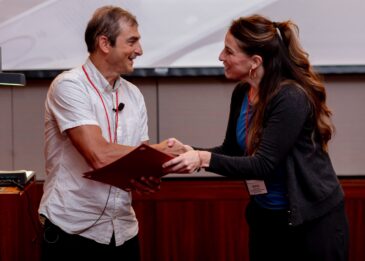
Join us in Ithaca or NYC to engage with peers and experts from around the world.
- 2 to 5 days
- $3,000 to $10,000
- In person - Ithaca or NYC
Programs for Teams
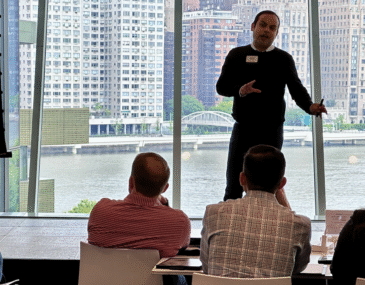
Address strategic challenges with Cornell University faculty to develop the skills required for organizational success.
- Custom Enterprise Programs
- Price varies
- In person or hybrid
Request Information Now by completing the form below.
Act today—courses are filling fast.
Purchase Options
3900

$3,900
Spaceflight Mechanics
| Select Payment Method | Cost |
|---|---|
| $3,900 |
Test Your Knowledge
Take the Spaceflight Mechanics self-assessment
Review Program Pricing and Details