

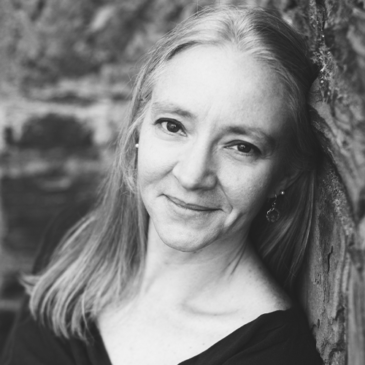
Aoise Stratford is a dramaturg, playwright, and lecturer at Cornell University’s Department of Performing and Media Arts, as well as director of education at The Cherry Arts, a not-for-profit arts facilitator and presenting organization. Her plays have won several awards and been produced around the world, including at National Theatre London, Solo Chicago, and the New York City Fringe. Locally, Ms. Stratford has co-authored two walking headphone plays for The Cherry and adapted “A Christmas Carol” for The Hangar Theater. Her work on The Cherry’s season seeks to provide meaningful production context for audiences and to spark, foster, and facilitate community conversations — as well as inspire action — about displacement, dispossession, migration, and oppression. Ms. Stratford holds a Ph.D. in Theatre History and Dramatic Literature from Cornell and an MFA in Creative Writing from the University of San Francisco.
Request More Info
Overview and Courses
Whether you’re an aspiring fiction writer, screenwriter, or editor, this certificate program provides you with the opportunity to craft engaging narratives that captivate readers and spark imagination. Throughout the courses, you’ll develop compelling stories as you refine your voice and master essential craft techniques in a variety of genres.
You will begin by building foundational skills in character development, world-building, story structure and narrative perspective. As you progress, you’ll explore advanced techniques for crafting dialogue, imagery and action, honing your ability to create immersive and impactful scenes. Throughout the program, you’ll practice shaping stories that resonate emotionally and leave lasting impressions — all while developing your unique style.
Through practical application and meaningful critiques from peers and expert writers, this certificate will enable both emerging and experienced writers to strengthen their creative writing practice. Each course combines theoretical understanding with hands-on exercises, allowing you to immediately apply new concepts to your own projects. By the end of the program, you’ll have both the technical skills and confidence to produce writing that resonates.
The courses in this certificate program are required to be completed in the order that they appear.
Course list
- Jun 10, 2026
- Aug 5, 2026
- Sep 30, 2026
- Nov 25, 2026
- Jan 20, 2027
- Mar 17, 2027
- May 12, 2027
Vivid characters and immersive worlds are key to captivating storytelling. In this course, you will develop compelling characters and rich story settings through hands-on writing exercises and targeted techniques. You'll craft detailed character biographies, explore the interplay between setting and personality, and build cohesive story worlds with their own internal logic and "dark matter." Through focused exercises in both poetry and prose, you'll create rich narrative environments that authentically reflect and shape your characters' experiences.
The following course is required to be completed before taking this course:
- Developing the Story and Idea
- Apr 29, 2026
- Jun 24, 2026
- Aug 19, 2026
- Oct 14, 2026
- Dec 9, 2026
- Feb 3, 2027
- Mar 31, 2027
Mastering the flow of story progression and dramatic tension allows writers to keep readers engaged from beginning to end. In this course, you will craft compelling narratives by honing the essential mechanics of plot development and character transformation. You'll examine conflict types, story beats, and plot structures, and you'll practice techniques for guiding characters through meaningful change. These principles will be applied across multiple forms, from traditional narrative to poetry, creating dynamic scenes that drive stories forward.
The following courses are required to be completed before taking this course:
- Developing the Story and Idea
- World-Building and Character Development
- May 13, 2026
- Jul 8, 2026
- Sep 2, 2026
- Oct 28, 2026
- Dec 23, 2026
- Feb 17, 2027
- Apr 14, 2027
The way a story is told can shape its impact and deepen its connection with readers. This course explores the strategic use of narrative perspective and voice to craft distinctive, engaging stories. By experimenting with different points of view, tonal approaches, and voice techniques, you will refine your storytelling style while building meaningful connections with your audience. Examples from multiple genres, including poetry and film, will provide inspiration and expand your narrative toolkit.
The following courses are required to be completed before taking this course:
- Developing the Story and Idea
- World-Building and Character Development
- Building Blocks of Scene and Structure
- May 27, 2026
- Jul 22, 2026
- Sep 16, 2026
- Nov 11, 2026
- Jan 6, 2027
- Mar 3, 2027
- Apr 28, 2027
Dialogue has the power to bring characters to life and drive the story forward in subtle, impactful ways. In this course, you will craft authentic, purposeful dialogue that advances plot, reveals character, and enriches stories with layered meaning. Practical exercises in dialogue construction, exposition management, and subtext development will help you create conversations that feel natural while serving multiple narrative functions. You will also build a systematic approach to revising and refining dialogue.
The following courses are required to be completed before taking this course:
- Developing the Story and Idea
- World-Building and Character Development
- Building Blocks of Scene and Structure
- Apr 15, 2026
- Jun 10, 2026
- Aug 5, 2026
- Sep 30, 2026
- Nov 25, 2026
- Jan 20, 2027
- Mar 17, 2027
Scenes that captivate readers and draw them into the world of a story are built through rich detail and intentional action. In this course, you will craft vivid, dynamic scenes using sensory detail and purposeful movement. By practicing description, metaphor, and action sequences, you'll create immersive experiences that drive your stories forward. Techniques for balancing showing and telling, maintaining clarity in action scenes, and weaving imagery into the narrative will further enhance your storytelling skills.
The following courses are required to be completed before taking this course:
- Developing the Story and Idea
- World-Building and Character Development
- Building Blocks of Scene and Structure
- Apr 29, 2026
- Jun 24, 2026
- Aug 19, 2026
- Oct 14, 2026
- Dec 9, 2026
- Feb 3, 2027
- Mar 31, 2027
Request more Info by completing the form below.
How It Works
- View slide #1
- View slide #2
- View slide #3
- View slide #4
- View slide #5
- View slide #6
- View slide #7
- View slide #8
- View slide #9
Faculty Author
Key Course Takeaways
- Create complex, believable characters within richly detailed story worlds
- Construct effective narrative frameworks using proven structural techniques
- Develop distinctive narrative voices and strategic point-of-view approaches
- Craft natural dialogue enhanced by meaningful subtext and purposeful exposition
- Build immersive scenes through the balanced use of description, action, and sensory detail
- Apply professional revision techniques across all elements of creative writing

Download a Brochure
Not ready to enroll but want to learn more? Download the certificate brochure to review program details.
What You'll Earn
- Creative Writing Certificate from Cornell University College of Arts and Sciences
- 96 Professional Development Hours (9.6 CEUs)
Watch the Video
Who Should Enroll
- Aspiring writers (fiction, playwriting, screenwriting, memoirs)
- Journalists
- Content writers
- Actors
- Teachers
- Publishing and editing professionals
- Individuals looking to adapt or develop stories to a new medium
- Anyone with an interest in narrative storytelling
Frequently Asked Questions
Strong creative writing calls for more than inspiration; it requires a repeatable craft process for generating ideas, building characters and worlds, shaping scenes and structure, and revising with purpose. In Cornell’s Creative Writing Certificate, authored by faculty from Cornell's renowned College of Arts & Sciences, you will develop that process while practicing across multiple genres and mediums so you can produce work that is clearer, more engaging, and more intentional.
You will build core storytelling skills in a way that is designed to translate directly into your own drafts. You'll practice workshopping and close reading, experiment with form and formatting conventions, develop vivid characters and settings with coherent rules and “dark matter,” design conflict and beats that propel change, refine voice and point of view, and write dialogue with subtext, clarity, and controlled exposition. You'll also strengthen scene-level writing through sensory detail, metaphor discipline, and purposeful action, then learn to identify patterns and theme so your writing resonates as a complete piece.
You should choose Cornell’s Creative Writing Certificate because the program is built around hands-on exercises, discussions, and multi-part course projects, so that you can move beyond theory to begin to steadily produce pages. You will leave with practical tools you can reuse, a stronger revision approach, and a clearer sense of how to craft stories that hold a reader’s attention.
You will learn creative writing in an environment that is designed to help you practice consistently, revise effectively, and get meaningful input on your work. Rather than a purely self-directed experience, eCornell courses are built for active learning through guided exercises, facilitated discussions, and applied projects that develop your draft in stages.
Distinctive elements include:
- A faculty-designed curriculum that builds craft from idea generation through revision, including character and world building, scene structure and beats, voice and point of view, dialogue and subtext, and image and action
- A workshop-oriented learning experience where you practice giving and receiving constructive feedback, using techniques like popcorning, question-driven critique, and close reading
- A cohort-based format with an expert facilitator so you have structure, accountability, and substantive feedback on graded project work
- Multi-part, step-by-step course projects that help you apply each module immediately, from developing story ingredients and character sketches to outlining plot turns and revising dialogue for clarity and impact
This combination helps you move from isolated drafting to a more professional writing practice that is grounded in craft vocabulary, deliberate choices, and repeatable revision tools.
The Creative Writing Certificate is designed for writers who want a structured way to improve their craft and develop stronger drafts while fitting learning into a busy schedule. It is a strong fit if you are:
- An aspiring writer working in fiction, memoir, playwriting, or screenwriting
- A hobbyist writer who wants to refine storytelling skills and explore new forms and genres
- A journalist or content writer who wants stronger narrative technique, voice, and scene-level writing
- An actor or teacher who wants to strengthen story, character, and dialogue skills
- A publishing or editing professional who wants a deeper craft toolkit for analysis and revision
- A creative professional interested in adapting a story to a new medium who wants to understand how form, format, and point of view change what the audience experiences
You do not need to be in a specific industry. The program is designed to help you practice core storytelling skills you can apply to many kinds of writing projects.
Across the certificate, you will complete multi-part writing projects that build your skills step by step, including peer feedback, analysis, rewriting in new forms, generating story material, developing character and world elements, outlining structure, and revising for impact. Past learners have applied the program’s tools to craft novels and short stories, develop stage plays and screenplays, create poetry and lyrics, and enhance journaling and personal essays.
These projects are designed to help you produce pages while practicing specific craft moves so you can carry the same tools into your next draft, script, or story revision.
This certificate will help you strengthen the storytelling craft skills that make your writing more compelling, clear, and publishable across creative and professional contexts.
After completing the Creative Writing Certificate, you will:
- Create complex, believable characters within richly detailed story worlds
- Construct effective narrative frameworks using proven structural techniques
- Develop distinctive narrative voices and strategic point-of-view approaches
- Craft natural dialogue enhanced by meaningful subtext and purposeful exposition
- Build immersive scenes through the balanced use of description, action, and sensory detail
- Apply professional revision techniques across all elements of creative writing
Students commonly report long-term benefits that include noticeable improvement in craft, voice, and clarity, plus a more consistent writing practice supported by structured exercises and accountability. Many also cite detailed, actionable guidance from the facilitator, an encouraging community that helps them revise with confidence, and practical tools and templates they continue using after the program to generate ideas, develop scenes, and overcome creative blocks.
In addition, because eCornell represents the pinnacle of premium online professional education, participants of eCornell’s programs often experience long-term career transformation such as promotions to more senior roles, salary increases, improved networking opportunities, and successful career transitions.
The Creative Writing Certificate includes 6 short courses, each running for 2 weeks, so you can typically complete the full certificate in about 3 to 4 months depending on how you schedule your start dates.
In practice, you can expect a manageable weekly cadence of about 6 to 8 hours, designed to fit the schedule of busy working adults. Most coursework is asynchronous, which means you can complete readings, videos, writing exercises, and project work on your own schedule each week. Some courses also offer live sessions that offer real-time discussion and support, but the core learning experience is built to be flexible while still giving you structure and momentum.
Students commonly describe this program as a practical, confidence-building creative writing experience that helps them produce stronger work quickly without needing to put their careers or busy lives on hold. Many note that the curriculum feels carefully sequenced: Concepts are introduced clearly then reinforced through guided exercises, templates, and projects that move their stories forward from idea generation to revision.
A few themes come up again and again:
- Noticeable improvement in craft, voice, and clarity
- Structured, hands-on exercises that translate directly to students’ own writing
- High-quality facilitator guidance with detailed, actionable feedback
- A motivating community of writers through workshops, discussions, and live sessions
- Flexible online learning that fits full-time work and family schedules
- Engaging multimedia lessons (short videos, readings, downloadable tools) that make ideas easy to apply
- Real momentum — many students report writing more consistently and overcoming longstanding creative blocks
Overall, students tend to say the program blends rigorous instruction with an encouraging environment, giving them concrete techniques (for developing scenes, characters, dialogue, and revision habits) and the accountability to use those tools right away. They often leave with stronger drafts, a clearer process, and renewed excitement about writing.
You do not need formal creative writing credentials to enroll, and the program is designed to support both emerging and experienced writers. You will build skills through short, focused exercises and practical templates then apply those tools to your own scenes, characters, and story ideas.
If you already write regularly, the certificate helps you become more deliberate about craft choices such as point of view, scene beats, subtext, and revision strategy. If you are returning to writing after time away, the program’s structured practice and community feedback can help you rebuild momentum and confidence.
You will explore storytelling craft across multiple genres and mediums so you can understand how the same core principles change with form. The program includes examples and exercises that touch fiction, memoir, stage play, screenplay, and poetry, including adapting a piece from one format to another.
You will also work with genre expectations and tone, practicing how to meet or subvert conventions in areas such as mystery, romance, thriller, horror, fantasy, and comedy forms like satire and parody. This cross-genre approach helps you make more intentional choices about structure, voice, and audience experience.
You will not be writing in isolation. Courses use a workshop model where you share short exercises and drafts, practice giving constructive feedback, and revise based on what you learn from readers.
You can expect multiple feedback channels:
- Peer interaction through the Writers’ Room discussions, where you exchange questions, observations, and revisions-in-progress
- Structured critique methods that keep feedback actionable, including popcorning quick reactions and framing critique as questions
- Facilitator guidance and feedback on your project submissions, helping you connect course concepts to your writing goals
This approach is designed to help you develop both stronger pages and stronger editing instincts, because learning how to read and respond to other writers is part of improving your own craft.
{Anytime, anywhere.}
Request Information Now by completing the form below.

Creative Writing
| Select Payment Method | Cost |
|---|---|
| $2,999 | |