
Course list

Effective risk communication goes beyond sharing information. It is a strategic process that helps people, organizations, and communities understand, evaluate, and respond to uncertainty. Professionals across public, private, and nonprofit sectors use risk communication to address challenges ranging from public health, food and consumer safety, and environmental hazards to cybersecurity, data privacy, misinformation, and emerging technologies such as artificial intelligence. Across these diverse contexts, successful risk communication begins with a clear purpose and a well-defined strategy long before a crisis occurs.

In this course, Professors Katherine McComas and Dominic Balog-Way challenge common assumptions about risk, communication, and strategy while introducing an evidence-informed approach to communicating under uncertainty. You will distinguish hazards from risks, examine how different people define and prioritize risk, and explore the strengths and limitations of one-way and multiway communication.

Through case studies, real-world examples, and applied activities drawn from a range of sectors and countries, you will explore how effective risk communication aligns missions, goals, objectives, strategies, tactics, and evaluation.

  • Dec 9, 2026
  • Mar 3, 2027
  • May 26, 2027
  • Aug 18, 2027
  • Nov 10, 2027

Audiences do not encounter risk information as blank slates. Their understanding of risk is shaped by personal experiences, values, cultural influences, social contexts, and perceptions of those communicating the information. Effective risk communicators recognize that successful communication depends not only on explaining hazards clearly but also on understanding how different audiences interpret uncertainty and decide whom to trust. Building effective risk communication begins with understanding these social and psychological dimensions of risk perception and how people interpret risks differently that may affect them and their communities.

In this course, Professors Katherine McComas and Dominic Balog-Way will guide you through the process of identifying, characterizing, and evaluating audiences. You will explore the cognitive shortcuts people use when evaluating risk, examine the social and cultural factors that influence risk perceptions, and discover why different groups often respond to the same risk in markedly different ways. You'll also consider the vital role of trust and trustworthiness in effective risk communication and public engagement.

Through international case studies and practical exercises, you will develop practical strategies for identifying audience concerns, recognizing meaningful differences across communities and cultures, and communicating in ways that build credibility, foster trust, and support more effective risk management.

The following course is required to be completed before taking this course:

  • Mapping Your Risk Communication Strategy
  • Dec 23, 2026
  • Mar 17, 2027
  • Jun 9, 2027
  • Sep 1, 2027
  • Nov 24, 2027

Effective risk communication involves more than delivering accurate information; it requires making strategic decisions about what to communicate, how to communicate it, who should deliver the message, and when and where audiences are most likely to engage with it. Even well-supported information may fail to achieve its goals if messages do not align with audience needs, expectations, or concerns. Because no message can optimize every desirable quality, effective risk communicators must make thoughtful trade-offs while remaining open to learning, feedback, and adaptation.

In this course, Professors Katherine McComas and Dominic Balog-Way will guide you through the process of developing, refining, sharing, and monitoring audience-informed risk messages. You will examine how communication choices involving evidence, language, framing, storytelling, visuals, and recommendations influence audience understanding and response. You'll also explore the trade-offs inherent in message design, the role of audience engagement throughout the communication process, and the value of feedback and message testing in improving effectiveness.

Through real-world case studies and applied activities, you will explore how to select appropriate messengers and communication channels, develop messages that support strategic objectives, and adapt communication approaches as audience needs and evidence evolve.

The following courses are required to be completed before taking this course:

  • Mapping Your Risk Communication Strategy
  • Engaging Your Risk Communication Audiences
  • Jan 6, 2027
  • Mar 31, 2027
  • Jun 23, 2027
  • Sep 15, 2027
  • Dec 8, 2027

Even a well-designed strategy can become ineffective if assumptions are wrong, contexts change, or audiences cannot act on the guidance risk communicators provide. New evidence, evolving risks, organizational constraints, political developments, crises, and rapidly changing communication technologies can all reshape what a strategy produces. To remain effective, strategic risk communicators must continuously evaluate their efforts, monitor the environments in which they operate, and adapt their approaches while staying focused on their communication objectives.

In this course, Professors Katherine McComas and Dominic Balog-Way will help you look inward, outward, and ahead. You will explore how to define meaningful measures of success, distinguish communication activities from outcomes, and integrate evaluation throughout the planning, implementation, and assessment process. You'll also examine how political, institutional, historical, and audience contexts influence strategic decision making as well as how organizational preparedness, surge capacity, and trusted relationships can support communication efforts during periods of uncertainty and change. Finally, you will explore the opportunities and challenges created by artificial intelligence, social media, and other emerging technologies that are reshaping communication ecosystems.

Through practical examples and applied activities, you will develop the skills needed to assess communication effectiveness, respond strategically to evolving conditions, and maintain trust and credibility in an increasingly complex risk environment.

The following courses are required to be completed before taking this course:

  • Mapping Your Risk Communication Strategy
  • Engaging Your Risk Communication Audiences
  • Designing Audience-Informed Messages
  • Jan 20, 2027
  • Apr 14, 2027
  • Jul 7, 2027
  • Sep 29, 2027
  • Dec 22, 2027

Symposium sessions feature two days of live, highly interactive virtual Zoom sessions that will explore today's most pressing topics. The Leadership Symposium offers you a unique opportunity to engage in real-time conversations with peers and experts from the Cornell community and beyond. Using the context of your own experiences, you will take part in reflections and small-group discussions to build on the skills and knowledge you have gained from your courses.

Join us for the next Symposium in which we'll discuss the ways that leaders across industries have continued engaging their teams over the past two years while pivoting in strategic ways. You will support your coursework by applying your knowledge and experiences to relevant topics for leaders. Throughout this Symposium, you will examine different areas of leadership, including the psychology of leadership; women in leadership; and leading in a volatile, uncertain, complex, and ambiguous world. By participating in relevant and engaging discussions, you will discover a variety of perspectives and build connections with your fellow participants from various industries.

All sessions are held on Zoom.

Future dates are subject to change. You may participate in as many sessions as you wish. Attending Symposium sessions is not required to successfully complete any certificate program. Once enrolled in your courses, you will receive information about upcoming events. Accessibility accommodations will be available upon request.

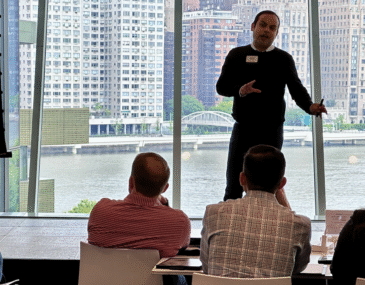
eCornell online Workshops are live, interactive learning experiences lasting 1 to 4 hours and led by Cornell faculty experts. These premium, short-format sessions focus on AI topics and are designed for busy professionals who want to gain immediately applicable skills and strategic perspectives. Workshops may include faculty presentations, breakout discussions, and guided hands-on practice.

The AI Workshops All-Access Pass provides you with unlimited participation for 6 months from your date of purchase. Whether you choose to attend one Workshop per month or several per week, the All-Access Pass allows you to customize your AI journey and stay on top of the latest AI trends.

Hosted by Cornell faculty at the forefront of their fields, Workshops cover a range of cutting-edge AI topics applicable across industries. Workshops are offered at three levels to allow you to choose topics that match your experience.

  • AI Foundations ​​​​​
    • These Workshops introduce core AI concepts, terminology, capabilities, limitations, and practical applications. No prior AI experience is required.
    • Best for: Beginners, AI-curious professionals, and teams starting their AI journey.
  • AI in Practice ​​​​​​
    • These Workshops focus on practical skills, workflows, and strategies that help participants use AI more effectively in their day-to-day work. Some familiarity with AI tools is recommended.
    • Best for: Professionals who have experimented with AI and want to build confidence and capability.
  • AI Leadership and Transformation ​​​​​​
    • These advanced Workshops explore emerging technologies, strategic implementation, governance, organizational impact, and specialized applications. AI fluency is expected, and some Workshops may have prerequisites.
    • Best for: AI leaders, transformation teams, executives, and advanced practitioners.

Request
more Info
by completing the form below.

Act today—courses are filling fast.

How It Works

  • Communications directors and PR managers responsible for communicating about risk across their organizations and externally
  • Risk communication and country risk teams developing communication strategies before challenges or incidents arise
  • Public information officers at health, environmental, and food safety regulatory agencies in the U.S. and Europe
  • Risk management leaders at pharmaceutical, chemical, biotech, and energy companies operating in highly regulated environments
  • Health, emergency, and public safety managers communicating hazards to the communities they serve
  • Executives, operations leaders, and project managers who oversee or coordinate risk communication without formal training in the field
  • Technical specialists, analysts, marketers, and professionals in advocacy, education, and public lands whose roles include communicating about risk
“I would found an institution where any person could find instruction in any study.”
{Anytime, anywhere.}
Ezra Cornell
Founder of Cornell University