
Course list

There are countless paths to making tangible, positive differences in the world through community-engaged learning (CEL), including coursework, internships, community-based research, international engagement, and student organizations. The modules in this course offer opportunities for you to explore your vision for impacting the world through the design of a CEL course or program. In each of the modules, you will discover key concepts, best practices, and various CEL resources to support your vision.
In this course, you will examine different dimensions of cultural humility to improve students' cultural self-awareness, their ability to communicate across difference, and their skills in addressing inequities by holding institutions accountable through community-engaged learning (CEL). You will incorporate strategies to facilitate students' ability to enact cultural humility in interpersonal and institutional relationships. You will also assist students in connecting the complexity of identities with CEL in order to create a healthy, thriving classroom community.  

The value of community-engaged learning (CEL) courses and programs hinges on the quality of the relationships developed with community partners. This course provides you with the tools and resources you need to design a learning experience that ensures students will be primed to learn from, as well as work with, community partners. 

By the end of this course, you will have applied the cornerstone principles of both developing and sustaining reciprocal community partnerships. Exploring asset-based strategy and collaborative approaches will strengthen your capacity to draw on the unique wisdom of community partners and organizations both present and future. Your work will continue to benefit from an expanded focus on functional flexibility within your design mindset and the confidence that your CEL course or program will effectively weather and thrive in the inherently dynamic and unpredictable environment of CEL partnerships.

Critical reflection is an essential learning philosophy and process, and it is a core outcome for community-engaged learning (CEL). The design of any community-engaged course or program must include critical reflection strategies that are intentional, integrated, and systematic. This affords you multiple opportunities to describe, analyze, interpret, and communicate the value of your CEL experience to both internal and external audiences.

This course encompasses the critical reflection definitions and models the techniques and best practices necessary to maximize student learning and community impact. You will receive the guidance, tools, and resources needed to effectively incorporate and assess critical reflection in community-engaged projects and programs.

In this course, you will recognize your role as a leader in community-engaged learning and discover ways to inspire and enact change in the community and the institution. You will explore tools and strategies to facilitate change and challenge the status quo while defining what outcomes you intend to create. You will determine what it means to be an engaged leader and flip the idea of leadership to include everyone.

With the tools and models provided, you will confront assumptions and embrace theories of change to invite learning and reflection on institutional contributions and constraints. You will also identify challenges in your institution and create a plan for addressing them in order to build capacity and promote lifelong learning within the institution and wider community.

Request
more Info
by completing the form below.

Act today—courses are filling fast.

How It Works

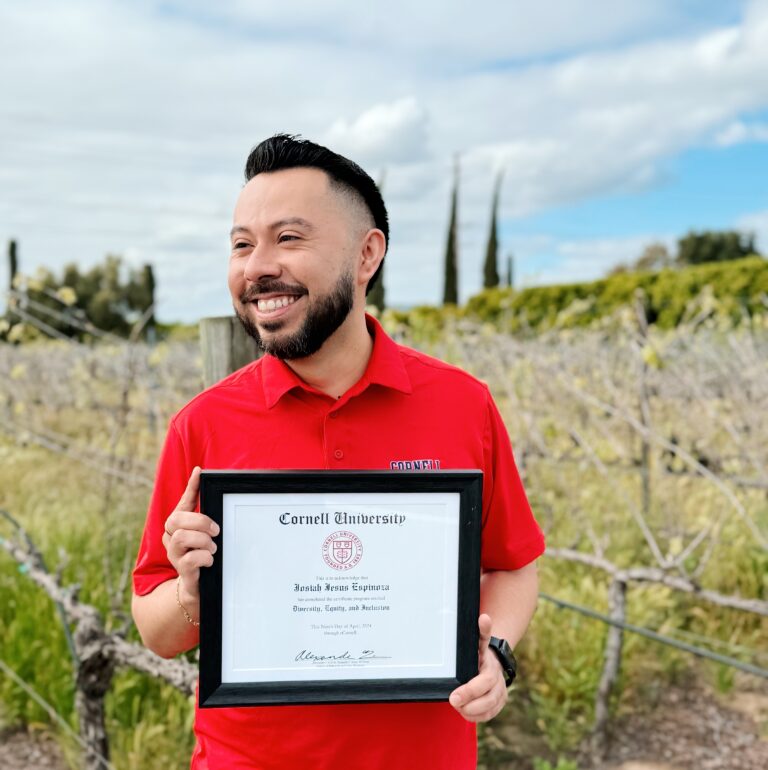
I have always been passionate to voice the voice of the unheard and provide an opportunity to bring everyone to the table. This certificate gave me the experience, tools and skills to do so... It was exactly what I needed.
‐ Josiah E.
Josiah E.

Frequently Asked Questions

Community-engaged work is most effective when it is designed with communities, not simply delivered to them. Cornell’s Community-Engaged Learning Program helps you move from good intentions to repeatable practice by giving you concrete frameworks, sample activities, and downloadable tools you can use to design ethical, rigorous, and mutually beneficial community-engaged learning (CEL) experiences.

Across this program from Cornell’s Einhorn Center for Community Engagement, you will build core capabilities that show up in real projects: clarifying a community-identified public concern, establishing shared goals and SMARTER learning objectives, strengthening partnership quality through reciprocity and asset-based thinking, and building critical reflection into the experience so learning and impact are visible, assessable, and easier to communicate.

You will also strengthen how you lead in community settings by practicing cultural humility as a lifelong process that includes critical self-reflection, learning across difference, and action to redress inequities. These skills help you collaborate more effectively with partners, support students or team members, and navigate the complexity and unpredictability that often comes with community engagement.

If you want practical tools for reciprocal community partnerships, equity-minded cultural humility practices, and structured critical reflection methods you can apply right away, you should choose Cornell's Community-Engaged Learning Program.

Many online programs stop at inspiration or theory. Cornell’s Community-Engaged Learning Program is built to help you design community-engaged work that holds up in real settings, where timelines shift, relationships evolve, and power dynamics matter.

Instead of lecturing on generic topics, the program equips you with practical, field-tested tools you can adapt immediately, such as organizational scan resources, asset-mapping activities, partnership principles, templates for agreements that clarify roles and benefits, and structured reflection frameworks that make learning and community impact easier to assess and communicate.

You will also spend meaningful time on the human side of community work. Cultural humility is treated as a lifelong practice that includes identity awareness, communication across difference, and taking action to address inequities. That emphasis helps you build trust with partners and create healthier learning environments for students, volunteers, or cross-sector teams.

All content is designed by Cornell faculty, and the learning experience combines concise expert instruction with guided activities, examples, and downloadable resources so you can move from concept to implementation. Upon completion of the program, you will earn a Recognition of Achievement in Community-Engaged Learning from the Einhorn Center for Community Engagement at Cornell University.

Professionals and students who want to create positive community impact and also want a clear, ethical approach to doing the work will find a strong fit in Cornell’s Community-Engaged Learning Program.

The Community-Engaged Learning Program is designed for:

  • Educators building or improving community-engaged courses, service-learning experiences, or co-curricular programs
  • Staff and program leaders who coordinate community engagement, partnerships, or civic learning initiatives
  • Community-based researchers and practitioners who collaborate with local organizations, agencies, or coalitions
  • Community leaders and members of community organizations who partner with schools, nonprofits, or institutions
  • Corporate responsibility and social impact leaders who collaborate with communities and stakeholders
  • Anyone who wants practical tools to engage across difference, strengthen partnerships, and reflect critically on impact

Because the program is self-paced and tool-based, you can apply what you learn whether you are working locally or internationally and whether you are designing a course, supervising a project, or leading a community initiative.

Project work in Cornell’s Community-Engaged Learning Program is designed to produce real planning and facilitation outputs you can use in a course, program, or community partnership. You will apply concepts to your own context and build a set of reusable artifacts, such as:

  • A partnership readiness or planning snapshot that clarifies motivations, goals, stakeholders, and intended outcomes
  • An organizational scan of a potential community partner and an asset map that identifies community strengths and capacity
  • Draft partnership principles and a collaboration plan that supports reciprocity, shared decision-making, and clear communication
  • Partner documentation drafts, such as an MOU-style outline, a benefits agreement, and a workplan to define roles, resources, timelines, deliverables, and feedback loops
  • SMARTER learning objectives and an assessment matrix that aligns student learning goals with partner-identified outcomes
  • Critical reflection assignments using structured frameworks (for example, “What? So What? Now What?”) and a reflection map to plan touchpoints before, during, and after engagement
  • An ePortfolio plan or outline for documenting learning, growth, and community impact for different audiences
  • A power and stakeholder map, plus a basic risk analysis to anticipate challenges and act with appropriate courage and care

By the end of Cornell’s Community-Engaged Learning Program, you will have a practical toolkit for designing, improving, or scaling community-engaged learning in your setting.

Cornell’s Community-Engaged Learning Program helps you build credible, transferable skills for designing and leading community-engaged work that is ethical, measurable, and sustainable.

After completing the Community-Engaged Learning Program, you will be prepared to:

  • Explore the value of community-engaged learning (CEL) and apply CEL tools and activities
  • Enhance self-awareness through CEL
  • Cultivate and enact skills in cultural humility in interpersonal relationships, with team members, and in diverse community contexts
  • Develop an asset-based mindset and support reciprocal and sustainable community partnerships
  • Develop a foundation in critical reflection to enhance deeper learning
  • Cultivate your own leadership skills and knowledge and foster leadership skills in others to maximize your collective impact on the world

Students in the Community-Engaged Learning Program often report long-term benefits tied to execution and leadership in real community-facing roles. Learners commonly emphasize that the program helps them translate community partnership values into practical, repeatable approaches they can use in real projects and courses, including designing experiences that are mutually beneficial for students and community partners, clarifying goals and measurable outcomes, co-creating project scopes and expectations with stakeholders, applying equity-minded and ethical practices, and evaluating community impact and student learning using actionable assessment methods. Learners also note improved facilitation, communication, and relationship-building skills, and they highlight that the applied focus makes it easier to move from intention to implementation using concrete templates for managing timelines, resources, and partner coordination.

Designed to fit alongside work and other commitments, Cornell’s Community-Engaged Learning Program is fully self-paced and structured as five short online courses.

In practical terms, you can plan for about 8 hours of work per course, or roughly 40 total hours for the full certificate. Your time goes to short instructional videos, guided readings, reflective exercises, and hands-on planning work using downloadable tools and templates.

Because the schedule is self-paced, you can move faster when you have bandwidth or slow down during busy periods. Many learners choose a steady weekly rhythm so they can apply what they are building to a live course, partnership, research project, or community initiative as they go.

Students in Cornell’s Community-Engaged Learning Program often emphasize how the program helps them translate community partnership values into practical, repeatable approaches they can use in real projects and courses. They frequently point to a stronger ability to design learning experiences that are mutually beneficial for students and community partners, with clear goals and measurable outcomes, while staying grounded in reciprocity and ethical engagement.

Key themes students commonly highlight include:

  • Designing community-engaged projects with reciprocal benefits for partners and learners
  • Building and sustaining partnerships across nonprofits, government, and local organizations
  • Co-creating project scopes, roles, and expectations with community stakeholders
  • Applying equity-minded and ethical practices in community-based work
  • Evaluating community impact and student learning with actionable assessment methods
  • Improving facilitation, communication, and relationship-building skills
  • Using structured planning tools to manage timelines, resources, and partner coordination
  • Bringing frameworks from the courses directly into their workplaces, classrooms, and civic initiatives

Many also note that the Community-Engaged Learning Program’s applied focus makes it easier to move from intention to implementation, giving them concrete templates and strategies for launching or strengthening community-engaged learning in their specific context.

Prior experience in community-engaged learning can be helpful, but Cornell’s Community-Engaged Learning Program is designed to meet you where you are and help you build a solid foundation you can apply immediately.

You will start by clarifying motivations, quality criteria, and the kind of public concern you want to address with partners. From there, you’ll practice concrete planning and partnership tools, develop cultural humility through structured identity and dialogue activities, and learn reflection methods that help you and others make meaning from community engagement while staying attentive to power and inequity.

The Community-Engaged Learning Program works well whether you are new to CEL or returning to it with more responsibility, because the emphasis is on practical frameworks, adaptable templates, and ethical decision-making you can bring into a real course, program, or partnership.

Strong partnerships rarely happen by accident. Cornell’s Community-Engaged Learning Program helps you build a partnership approach that is reciprocal, asset-based, and resilient when circumstances change.

You will practice ways to identify and articulate partnership principles, shift from needs-based narratives to an asset-based mindset, and understand potential partners through structured scans and interviews. You’ll also work with practical documentation and planning tools that clarify mutual benefits, roles, resources, timelines, deliverables, and feedback loops, which reduces confusion and supports long-term trust.

Just as important, Cornell’s Community-Engaged Learning Program reinforces cultural humility and attention to power, so your partnership process is not only efficient but also equitable and community-centered.

When community engagement is hard to measure, it is also hard to improve, sustain, or explain to stakeholders. Cornell’s Community-Engaged Learning Program gives you structured ways to define outcomes and show evidence of learning and impact.

You will learn to set SMARTER objectives and align them with partner-identified outcomes then use planning and assessment matrices to connect activities to measurable indicators. You’ll also practice critical reflection methods that move beyond description by analyzing meaning, context, and power, using frameworks such as “What? So What? Now What?” and rubric-supported approaches.

To make results easier to share, the Community-Engaged Learning Program also introduces ePortfolio-based documentation so you can collect artifacts and reflections over time and communicate progress to different audiences, including students, partners, and institutional leaders.