

Sam Magavern is senior policy fellow at Partnership for the Public Good, a community-based think tank that he co-founded in 2007 and co-directed until 2019. He teaches at University at Buffalo Law School and Cornell University’s ILR School, where he was the Visiting Activist Scholar in 2019-2020. Mr. Magavern serves as the attorney for the City of Buffalo Living Wage Commission and as a commissioner on the Niagara River Greenway Commission. His publications range from scholarly articles to comic books; they include a non-fiction book, “Primo Levi’s Universe,” and a book of poetry, “Noah’s Ark.” Mr. Magavern received his B.A. from Harvard University and his J.D. from UCLA Law.

Equitable Community ChangeCornell Certificate Program
Equitable Community Change (ILRC02)
Enroll Now
Online
$2,500
Request More Info
More Info
Overview and Courses
In an "equitable community," everyone is included in the full benefits of society. Advancing equitable community change depends on understanding racial, social, spatial, economic, and environmental systems and their biases while, at the same time, developing innovative solutions to seemingly intractable social problems. This certificate program delves into the knowledge and skills needed for individuals like you, working in all sectors of society, to manage development and changes in ways that build more equitable, just, and sustainable communities.
Ultimately, you will discover the deep structural and cultural roots of today’s pressing social, economic, and environmental challenges then work to counteract them in the communities you serve. Throughout this six-course certificate, you will explore and plan social action research and apply course concepts, data, and information to propose policy initiatives and recruitment plans aimed at bringing diverse people and communities together for equitable change.
For the best experience in this program it is recommended to take these courses in the order that they appear.
Course list
An "equitable community" means one in which everyone is included in the full benefits of society. In this course, you will examine what inequity means to you and how it manifests within the U.S. and your community. You will identify causes of inequity including power differentials, biases, and ineffective development policies, among others. You will also identify an inequity in your community that is important to you and reflect on its causes. You will participate in several relevant discussions with peers, advancing your own and others' knowledge of these issues. Then, you will discover strategies to create equitable change and hear directly from activists working to do so in their communities. Finally, you will build your own plan for how to advocate to address an inequity in your community.
View Course Start Dates Hide Course Start Dates
View Course Details- Jul 15, 2026
- Sep 9, 2026
- Nov 4, 2026
- Dec 30, 2026
- Feb 24, 2027
- Apr 21, 2027
- Jun 16, 2027
You may feel like the defining challenges of our modern era, such as racial and economic inequality and climate change, are problems that cannot be solved. Perhaps you believe you don't have the agency or power to make this world a better and more equitable place. You may be well intentioned but feel that you just can't do much to create real and lasting change. If you ever want to break this cycle, you need to change the way you think. You need to recognize that you have agency and identify exactly where you can exercise it in pursuit of change that is meaningful and lasting.
This course delves into how you can take part in this important shift by learning to use the tools of systems thinking and power analysis. You will create a map of the system that is generating a persistent racial, social, or economic inequity that you aim to change. Using power analysis, you will then identify those actors and institutions that are supporting or blocking change, and you will determine where in this network of power to exert pressure for change. Finally, you will build a theory of change connecting short-term changes that are possible in the present through a series of logical steps to your vision for a more equitable future.
View Course Start Dates Hide Course Start Dates
View Course Details- Jul 29, 2026
- Sep 23, 2026
- Nov 18, 2026
- Jan 13, 2027
- Mar 10, 2027
- May 5, 2027
- Jun 30, 2027
Organizations and social movements can perform their own research to advance equitable community change. They can discover, collect, use, and disseminate data to support their projects and goals. But any raw data requires processing for it to become useful, valuable information. Such processing includes selective extraction, organization, analysis, and formatting. This processing allows data to reach its potential as powerful and persuasive information. This course introduces you to the processes by which data is analyzed and converted from raw resources into valuable information and knowledge.
The first step of gathering data relevant for an equitable community change project is to clearly formulate the questions you would like to try to answer using data. In this course, you begin by developing strong research questions about a community's social, economic, and environmental conditions and how those conditions change over time. You will then examine how to gather or find reliable data, and make a plan to do so in order to answer a research question. Next, you will discover some basic data analysis techniques and determine whether those techniques could be used to help you answer a research question. Finally, you will reflect on the importance of becoming a critical consumer of data analyses and evaluate data analysis examples.
View Course Start Dates Hide Course Start Dates
View Course Details- Apr 22, 2026
- Aug 12, 2026
- Oct 7, 2026
- Dec 2, 2026
- Jan 27, 2027
- Mar 24, 2027
- May 19, 2027
Policy is an instrument for coordinating people's behavior in various social situations. Public policy, often created and enacted by governments, can be either a source of inequity or a means for advancing equity, depending on its design and effects. In this course, you will use a number of methods to define a problem your community is facing, determine a policy goal you aim to achieve, and identify someone whom you can influence to create change. You will discover how to ensure the policy goals you pursue also help to promote change to the social structures and systems that persistently create inequity. You will examine the limits that laws and social norms put on the types of activism you can use to achieve your policy goals. You will then reflect on examples of groups who have effectively created change and identify the strategies and tactics they used which could also be useful for you.
At the end of the course, you will have developed a policy goal consistent with equitable development as well as a plan for how you could go about achieving that goal, which you can share with others to build collective action for community change.
View Course Start Dates Hide Course Start Dates
View Course Details- May 6, 2026
- Aug 26, 2026
- Oct 21, 2026
- Dec 16, 2026
- Feb 10, 2027
- Apr 7, 2027
- Jun 2, 2027
In this course, you will discover the forces that disempower and divide people, and keep them from getting involved. You will determine what motivates you to confront these forces and inspires you to work for change. You will then discover practical steps to recruit, expand, and develop a group of people who want to work for change together, and you will create a plan for how you will follow these steps to build your base. Then, you will explore two ways to build a cohesive and trusting group of people who can work together to create change. You will articulate a statement of why your group should take urgent action to create change, and explain how you will ensure that meetings of your group are effective, equitable, and collaborative. Using the tools in this course, you will be prepared to engage in collective action and motivate others to do so along with you.
View Course Start Dates Hide Course Start Dates
View Course Details- May 20, 2026
- Sep 9, 2026
- Nov 4, 2026
- Dec 30, 2026
- Feb 24, 2027
- Apr 21, 2027
- Jun 16, 2027
Perhaps you do not see yourself as a "researcher." In reality, however, we all perform some kind of research in our daily lives. Interestingly, the skills you use to navigate through day-to-day choices are the same basic skills you use in social action research projects that aim to define and propose solutions to collective problems.
In this course, you will begin to perform social action research to inform community change efforts. More specifically, you will study what social action research is and how to formulate and execute a plan for your research. Finally, you will explore how to communicate the findings of your research to a target audience who can help you to create equitable social change in the communities you serve. You will also see examples of action research and effective research communications that you can apply in your own research projects.
View Course Start Dates Hide Course Start Dates
View Course Details- Jun 3, 2026
- Sep 23, 2026
- Nov 18, 2026
- Jan 13, 2027
- Mar 10, 2027
- May 5, 2027
- Jun 30, 2027
eCornell Online Workshops are live, interactive 3-hour learning experiences led by Cornell faculty experts. These premium short-format sessions focus on AI topics and are designed for busy professionals who want to gain immediately applicable skills and strategic perspectives. Workshops include faculty presentations, breakout discussions, and guided hands-on practice.
The AI Workshops All-Access Pass provides you with unlimited participation for 6 months from your date of purchase. Whether you choose to attend one workshop per month, or several per week, the All-Access Pass will allow you to customize your AI journey and stay on top of the latest AI trends.
Workshops cover a range of cutting-edge AI topics applicable across industries, hosted by Cornell faculty at the forefront of their fields. Whether you are just getting started with AI, seeking to build your AI skillset, or exploring advanced applications of AI, Workshops will provide you with an action-oriented learning experience for immediate application in your career. Sample Workshops include:
- Work Smarter with AI Agents: Individual and Team Effectiveness
- Leading AI Transformation: Bigger Than You Imagine, Harder Than You Expect
- Using AI at Work: Practical Choices and Better Results
- Search & Discoverability in the Era of AI
- Don't Just Prompt AI - Govern it
- AI-Powered Product Manager
- Leverage AI and Human Connection to Lead through Uncertainty
Request more Info by completing the form below.
more Info
by completing the form below.Act today—courses are filling fast.
How It Works
Format
All Online
Time Commitment
3 months with 5 to 7 hours of study per week
Cost
$2,500
Learn From Top Minds
Courses are developed by Cornell faculty.
Power Your Career
Gain today’s most in-demand skills to stand apart.
Flexibility Fits Your Life
Learn on your schedule without stepping out of your job.
Small-class Experience
Participate in facilitated discussions and live sessions with industry peers.
Real-world Projects
Apply learnings and insights to your work to make an impact right away.
Personalized Feedback
Enjoy meaningful feedback on assignments from expert facilitators.
Format
All Online
Time Commitment
3 months with 5 to 7 hours of study per week
Cost
$2,500
Learn From Top Minds
Courses are developed by Cornell faculty.
Power Your Career
Gain today’s most in-demand skills to stand apart.
Flexibility Fits Your Life
Learn on your schedule without stepping out of your job.
Small-class Experience
Participate in facilitated discussions and live sessions with industry peers.
Real-world Projects
Apply learnings and insights to your work to make an impact right away.
Personalized Feedback
Enjoy meaningful feedback on assignments from expert facilitators.
- View slide #1
- View slide #2
- View slide #3
- View slide #4
- View slide #5
- View slide #6
- View slide #7
- View slide #8
- View slide #9
Faculty Authors
Sam Magavern
Senior Policy Fellow
Partnership for the Public Good
Visiting Activist Scholar, Cornell ILR School; Senior Policy Fellow, Partnership for the Public Good

Russell Weaver
Director of Research
Cornell ILR Buffalo Co-Lab
Director of Research, Cornell ILR Buffalo Co-Lab
Russell Weaver, Ph.D., is a geographer, quantitative social scientist, and Director of Research at the Cornell ILR School Buffalo Co-Lab. He was previously an associate professor in the Texas State University Department of Geography, where he taught courses in community geography, community development, urban planning, geographic thought, and quantitative data analysis. Dr. Weaver’s research programs are aimed at understanding and contributing to pathways for context-sensitive, sustainable, and equitable community change. He is the lead author of the book “Shrinking Cities: Understanding Urban Decline in the United States.” Find him on Twitter @RustBeltGeo.
Key Course Takeaways
- Identify the causes of inequity and plan to advocate for equitable community change
- Identify how persistent problems have systemic causes and can be resolved through collaborative systems changes
- Examine the role of research in advocating for equitable community change, and create a plan to gather and analyze relevant data
- Develop a policy change proposal that would enable a shift from inequitable to equitable development
- Build a plan to recruit and develop a base of people ready to engage in collective action
- Prepare to engage in social action research to inform community change efforts

Download Brochure
Fill out the form below to download program information and connect
with us.
Download a Brochure
Not ready to enroll but want to learn more? Download the certificate brochure to review program details.“
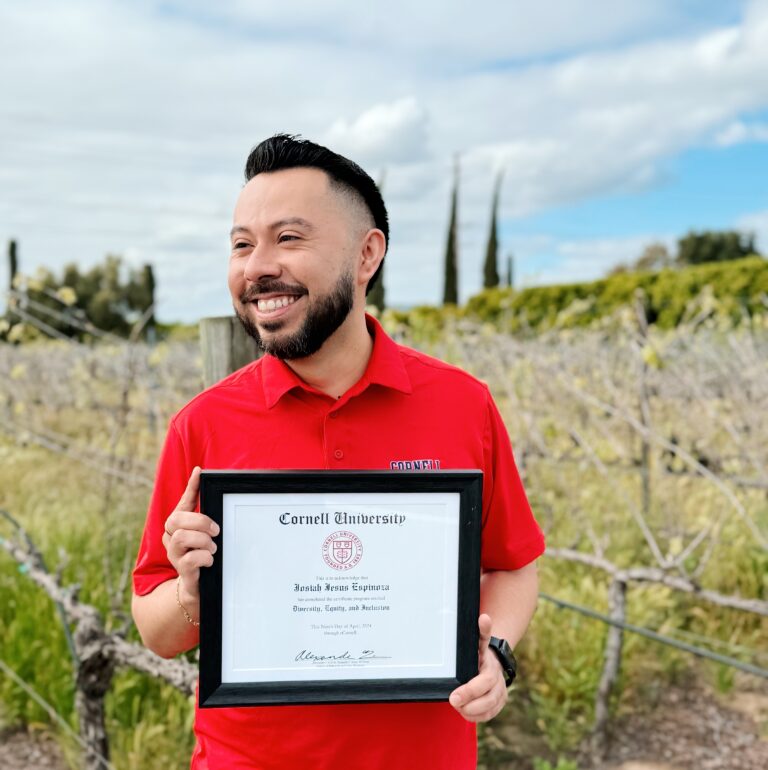
I have always been passionate to voice the voice of the unheard and provide an opportunity to bring everyone to the table. This certificate gave me the experience, tools and skills to do so... It was exactly what I needed.
‐ Josiah E.

What You'll Earn
- Equitable Community Change Certificate from Cornell ILR School
- 84 Professional Development Hours (8.4 CEUs)
Watch the Video
Hear eCornell students share their stories.
Who Should Enroll
- Activists and community development organizers and practitioners
- Policy makers and political staff
- Public interest lawyers and advocates
- Leaders and members of organized labor organizations
- Urban planners and strategic planning agencies
- Social workers
- Grant writers
- Educators
- People interested in engaging in community change
Frequently Asked Questions
Communities and organizations across every sector are being asked to deliver more equitable outcomes while navigating complex systems, limited resources, and competing stakeholder demands. Cornell’s Equitable Community Change Certificate helps you move from good intentions to a clear, practical plan for change by showing you how inequity is produced, where leverage points exist, and how to build strategies that can hold up in the real world.
In this certificate program, from Cornell’s School of Industrial and Labor Relations, you will build a set of integrated skills that support equity-focused action: diagnosing root causes of inequity, mapping systems and power, using data responsibly to strengthen your case, shaping policy goals that promote long-term systems change, and organizing people to sustain collective action. You will repeatedly apply what you learn through structured, multi-part projects focused on an inequity you care about, with feedback and discussion that help you sharpen your thinking and your plan.
If you want practical frameworks for diagnosing inequity, tools to design data-informed policy and advocacy strategies, and a step-by-step path to mobilizing people for durable community change, you should choose Cornell’s Equitable Community Change Certificate.
Many online programs rely on content consumption and self-graded quizzes. Cornell’s Equitable Community Change Certificate is built around applied work that helps you produce real outputs you can use in your organization or community, supported by an expert facilitator and a small cohort where peer dialogue strengthens your thinking.
You learn by doing. Across the Equitable Community Change Certificate, you develop an advocacy plan around a specific inequity, create a systems map using the iceberg model, run a power analysis and stakeholder map, and build a credible theory of change that connects short-term wins to long-term equity outcomes. You also gain the ability to frame strong research questions, identify reliable data sources (including public datasets such as the U.S. Census), select appropriate analysis techniques, and evaluate data analyses critically so you can use evidence without overclaiming what it proves.
The learning experience is intentionally human centered. Courses include facilitated discussions and opportunities for live sessions that help you test ideas, learn from practitioners, and receive feedback on your project work. That combination of structured accountability, applied projects, and guided interaction is what sets Cornell’s Equitable Community Change Certificate apart from typical self-paced offerings.
Enrolling in this certificate also provides you with a 6-month All-Access Pass to eCornell's live online AI Workshops, interactive sessions led by world-class Cornell faculty that combine Ivy League insight with practical applications for busy professionals. Each 3-hour Workshop features structured instruction, guided practice, and real tools to build competitive AI capabilities, plus the opportunity to connect with a global cohort of growth-oriented peers. While AI Workshops are not required, they enhance certificate programs through:
- Integrating AI perspectives across most curricula
- Responding to emerging AI developments and trends
- Offering direct engagement with Cornell faculty at the forefront of AI research
Equity goals show up in many roles, from grassroots organizing to public administration to institutional change work. Cornell’s Equitable Community Change Certificate is designed for professionals and community leaders who want a structured, practical way to analyze inequity and build a plan for action.
The Equitable Community Change Certificate is a strong fit if you are:
- An activist, organizer, or community development practitioner working on local change initiatives
- A policymaker, political staff member, or public sector professional shaping programs and policy
- A public interest lawyer, advocate, or labor leader navigating power, institutions, and accountability
- An educator, social worker, grant writer, or nonprofit professional designing equitable services and outcomes
- A planner or strategic planning professional working on housing, workforce, infrastructure, climate, or economic development
Cornell’s Equitable Community Change Certificate is designed to be accessible while still being rigorous. You don’t need a formal research background to succeed, but you should be ready to engage in discussions, complete structured projects, and apply frameworks to an issue in your community or professional context.
Project work in Cornell’s Equitable Community Change Certificate is designed to help you apply systems thinking, power analysis, research, policy design, and organizing tools to a real inequity you care about. You will develop practical deliverables in stages, so you finish the program with a clearer strategy and materials you can refine for your context.
Examples of projects learners have developed include:
- Organizing a districtwide campaign to replace exclusionary school discipline with restorative practices by banning K-through-5 out-of-school suspensions, standardizing a discipline matrix, and training staff for consistent implementation
- Building a state-level initiative to reduce Black maternal mortality by combining community partnerships, community-defined indicators, and family storytelling to drive accountability in maternal health systems
- Pressuring local government to close rural-urban education gaps by funding targeted incentives that recruit and retain qualified teachers in remote communities where vacancies persist
- Using federal procurement leverage to reduce harassment and improve leadership diversity in engineering by requiring leadership composition disclosures and a confidential, independent worksite reporting mechanism
- Prefiguring stronger paternity leave norms by mobilizing NGOs and employees to persuade major employers to expand paid leave policies that then increase public pressure for national policy change
Because the program’s projects are built around your selected issue, Cornell’s Equitable Community Change Certificate supports direct relevance whether you work in a nonprofit, public agency, school system, labor organization, or community coalition.
Cornell’s Equitable Community Change Certificate helps you build credible, evidence-informed strategies for equity-focused change that you can apply in advocacy, nonprofit, public sector, and community-based roles.
After completing the Equitable Community Change Certificate, you will have the skills to:
- Identify the causes of inequity and plan to advocate for equitable community change
- Identify how persistent problems have systemic causes and can be resolved through collaborative systems changes
- Examine the role of research in advocating for equitable community change, and create a plan to gather and analyze relevant data
- Develop a policy change proposal that would enable a shift from inequitable to equitable development
- Build a plan to recruit and develop a base of people ready to engage in collective action
- Prepare to engage in social action research to inform community change efforts
Students frequently describe long-term benefits that extend beyond the courses themselves. Learners report leaving with practical frameworks they can apply immediately, stronger confidence in turning equity goals into concrete action, and tools for coalition-building and moving stakeholders from insight to action. They also highlight the value of step-by-step projects that build toward an actionable plan, real-world examples that make strategies feel doable, and supportive facilitator feedback that helps them sharpen their work. Many say the flexible online format makes it possible to build these skills while maintaining a full professional schedule, and that they continue using the downloadable tools and approaches long after completing the program.
In addition, because eCornell represents the pinnacle of premium online professional education, participants in eCornell's programs often experience long-term career transformation such as promotions to more senior roles, salary increases, improved networking opportunities, and successful career transitions.
Cornell’s Equitable Community Change Certificate, which consists of 6 short courses, is designed to be completed in 3 months. Each course in this certificate runs for 2 weeks, with a typical weekly time commitment of 5 to 7 hours.
Designed for working adults, flexibility comes from the course design. You can complete most components on your own schedule, including short videos, readings, and project work, while still benefiting from facilitated discussions and opportunities for live sessions that add interaction and accountability. Cornell’s Equitable Community Change Certificate gives you structure without requiring you to be online all day.
Students in Cornell’s Equitable Community Change Certificate frequently describe the program as a practical, motivating experience that helps them turn equity goals into concrete community action. They often highlight how the coursework connects directly to real community challenges and equips them with tools they can use immediately in advocacy, nonprofit, public sector, and community-based work.
Common themes students share include:
- Practical frameworks for equitable change, including systems thinking, power analysis, and theory of change
- Real-world case examples that show how community strategies work in practice
- Social action research tools they can apply to gather, interpret, and communicate community data
- Step-by-step projects that build toward an actionable plan for their organization or community
- A focus on coalition-building and moving stakeholders from insight to action
- Clear, accessible instruction that makes equity and policy topics understandable for non-academics
- Engaging mix of short videos, readings, exercises, and downloadable tools
- Supportive, knowledgeable facilitators who provide specific, useful feedback
- Peer discussion that broadens perspective through shared community experiences
- Flexible, user-friendly online format that fits busy professional schedules
Overall, students say they finish the program with stronger confidence, a clearer strategy for creating equitable outcomes, and a set of resources they continue to use long after the courses end.
To make progress on persistent inequities, you need more than awareness. Cornell’s Equitable Community Change Certificate equips you with a set of practical frameworks for diagnosing what is driving inequity and choosing interventions that are strategic and realistic.
You will learn how to:
- Identify and analyze root causes of inequity, including the roles of power differentials, bias, and development policies
- Use systems thinking tools, including the iceberg model, to map patterns, structures, and mental models that sustain inequitable outcomes
- Conduct a power analysis and power mapping process to identify allies, opponents, stakeholders, and high-leverage targets
- Build a theory of change that connects short-term actions to long-term equitable outcomes and clarifies assumptions
- Formulate strong, answerable research questions and create a plan to obtain reliable data
- Select appropriate basic analysis approaches and evaluate data analyses critically
- Define an equitable policy goal and choose tactics that can advance it within real legal and institutional constraints
- Develop a plan for recruiting, organizing, and running equitable meetings that support collective action
A formal research or statistics background is not required to benefit from Cornell’s Equitable Community Change Certificate. The program teaches research and data concepts from the ground up in an applied way, so you can ask better questions, find or collect relevant information, and use evidence responsibly in advocacy and policy work.
You will practice turning a broad community concern into an answerable, relevant research question, then building a realistic plan to obtain data. The program also introduces foundational analysis concepts, along with guidance on how to critique data analyses so you can understand what findings do and do not support.
The most important readiness factor for Cornell’s Equitable Community Change Certificate is willingness to apply tools to a real issue you care about and to engage thoughtfully with peer discussion and facilitator feedback as you revise your work.
You will produce practical planning documents throughout Cornell’s Equitable Community Change Certificate, not just reflections on theory. The program’s assignments are structured as multi-part projects that help you develop and refine an actionable approach to a specific inequity in your community or professional environment.
Depending on your focus, you may finish with deliverables such as an advocacy plan, a systems map that clarifies root causes and leverage points, a power map of the institutions and actors shaping outcomes, a theory of change connecting immediate actions to longer-term goals, a plan for collecting and analyzing data to support your case, a policy goal with a short pitch and tactics, and a base-building and meeting plan to support collective action.
Cornell’s Equitable Community Change Certificate is designed so your work products build clarity over time, supported by feedback and discussion that help you strengthen your strategy before you use it publicly.
Explore Related Programs






Request Information Now by completing the form below.
Act today—courses are filling fast.
Purchase Options
2500

Equitable Community Change
| Select Payment Method | Cost |
|---|---|
| $2,500 | |
Review Program Pricing and Details