
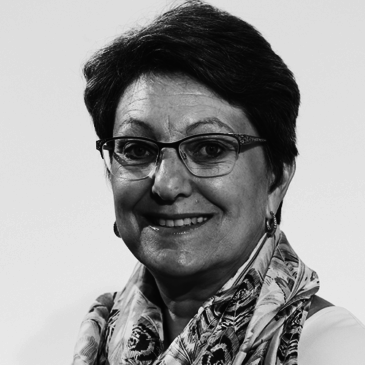
Beth McKinney is a lecturer in the College of Human Ecology and former Director of the Cornell University Wellness Program. She received her Bachelor’s degree in Nutritional Sciences and her Master’s degree in Health Education. Ms. McKinney’s expertise in coaching and counseling spans over 20 years and includes life coaching, nutrition counseling, wellness counseling, and behavior change. She also teaches counseling skills and behavior change techniques to Cornell undergraduates. A Certified Health Education Specialist (CHES) and Certified Intrinsic Coach® with previous experience in both clinical and community nutrition, Ms. McKinney specializes in both nutrition education and behavior change.

Client-Directed Counseling for Nutrition ProfessionalsCornell Certificate Program
Client-Directed Counseling for Nutrition Professionals (DNSC05ML)
Enroll Now
Online
$1,999
Request More Info
More Info
Overview
In today’s evolving healthcare landscape, Registered Dietitian Nutritionists (RDNs) must do more than provide sound nutritional advice: They need to inspire lasting change through effective counseling. In this certificate program, you will explore evidence-based strategies that deepen client engagement, foster trust, and promote meaningful behavior change. By honing advanced counseling techniques, you’ll not only strengthen your clinical expertise but also build more collaborative, productive relationships with your clients. Upon completing these courses, you’ll be equipped to elevate your practice, increase client satisfaction, and confidently deliver impactful nutrition counseling.
You’ll have six months to complete the required elements for this certificate program, but this flexible approach allows you to finish sooner based on your schedule.
Request more Info by completing the form below.
more Info
by completing the form below.Act today—courses are filling fast.
How It Works
Cost
$1,999
Time Commitment
40 hours with 6 months of access at your own pace
Engagement
100% self-paced
Power Your Career
Gain today’s most in-demand skills to stand apart.
Flexibility Fits Your Life
Learn on your schedule without stepping out of your job.
Personalized Facilitation
Receive expert feedback and guidance.
Real-world Projects
Apply learning and insights to your work to make an impact right away.
Learn From Top Minds
Courses are developed by Cornell faculty.
Cost
$1,999
Time Commitment
40 hours with 6 months of access at your own pace
Engagement
100% self-paced
Power Your Career
Gain today’s most in-demand skills to stand apart.
Flexibility Fits Your Life
Learn on your schedule without stepping out of your job.
Personalized Facilitation
Receive expert feedback and guidance.
Real-world Projects
Apply learning and insights to your work to make an impact right away.
Learn From Top Minds
Courses are developed by Cornell faculty.
Faculty Author
Lecturer, Cornell College of Human Ecology
Key Course Takeaways
- Strengthen client interactions using social cognitive learning theory to promote lasting behavior change
- Interpret your and your clients’ non-verbal cues and self-manage during counseling sessions
- Combine intuition and your client’s perspective to correctly identify nutrition problems and develop solutions
- Recognize clients' specific wants and needs to develop motivational goals aligned with their desire for change
- Enhance client confidence in achieving their goals through increased empathy
- Customize how you translate nutrition information to diverse clientele, blending this with your natural communication style

Download Brochure
Fill out the form below to download program information and connect
with us.
Download a Brochure
Not ready to enroll but want to learn more? Download the certificate brochure to review program details.“
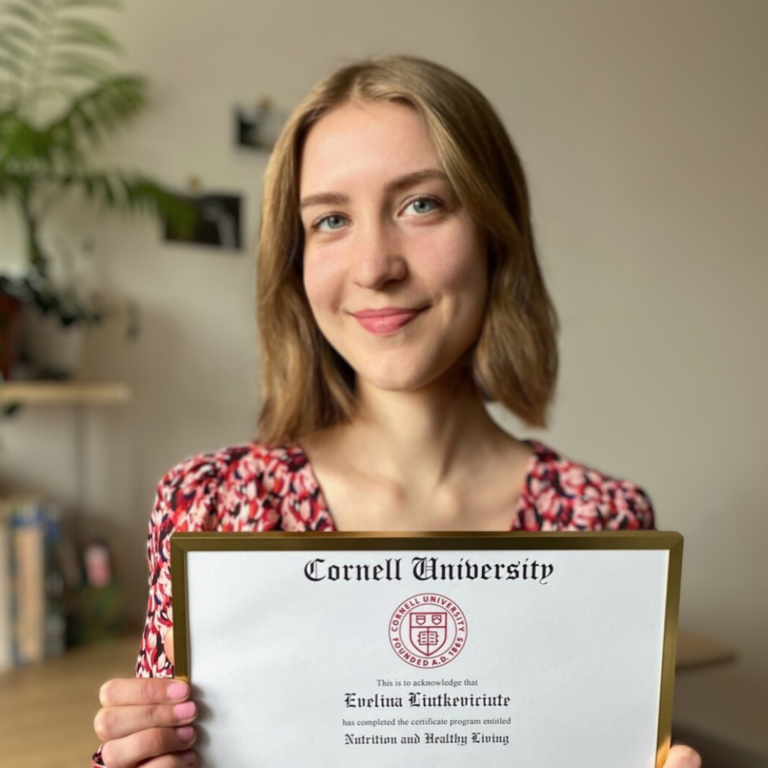
Earning a certificate from eCornell made me even more curious and confident to continue learning. Most importantly, it motivated me to continue making healthy food and lifestyle choices and encourage and inspire others to do the same.
‐ Evelina L.
What You'll Earn
- Client-Directed Counseling for Nutrition Professionals Certificate from Cornell University’s Division of Nutritional Sciences
- 40 Professional Development Hours (4 CEUs)
- The course in this program has been approved by the Commission on Dietetic Registration as self-study activities earning 40 CPE units
Watch the Video
Learn how eCornell delivers an unmatched online learning experience to working professionals and organizations across the globe.
Who Should Enroll
- Students from the United States must be Registered Dietitians (RD or RDN) or have a Certified Nutrition Specialist (CNS) certification issued by the American Nutrition Association (ANA)
- International students need to have a credential approved by the International Confederation of Dietetic Associations — full list available here: https://internationaldietetics.org/ndas
Frequently Asked Questions
Nutrition counseling is increasingly about helping clients follow through, not just giving the right recommendation. Cornell’s Client-Directed Counseling for Nutrition Professionals Certificate equips you to strengthen rapport, deepen engagement, and support lasting behavior change using evidence-based counseling strategies that translate directly into higher-quality client conversations.
In this certificate program, authored by faculty from Cornell’s Division of Nutritional Sciences, you will build advanced skills that many nutrition professionals want more practice with, including identifying what a client truly wants and needs, setting motivational goals aligned to readiness for change, and translating nutrition information in ways that fit diverse clients and your own authentic communication style. You’ll also sharpen your ability to interpret nonverbal cues and self-manage in the moment, so you can stay effective in sensitive or high-stakes sessions.
If you want more confident conversations about behavior change, stronger client trust and adherence, and practical tools you can use immediately in sessions, you should choose Cornell’s Client-Directed Counseling for Nutrition Professionals Certificate.
Many online programs deliver counseling concepts as passive content then leave you to figure out how to use them in a real session. Cornell’s Client-Directed Counseling for Nutrition Professionals Certificate is built for application and skill building, so you practice evidence-informed approaches for behavior change in a structured, supported environment.
The Client-Directed Counseling for Nutrition Professionals Certificate experience is designed around applied, job-relevant assignments, so you are not only learning theory related to behavior change and client engagement; you’re also translating it into how you listen, respond, set goals with clients, and communicate nutrition information in ways that support follow-through.
You learn with an expert facilitator who provides feedback on your work. This human-centered design helps you test your approach and refine how you show up in counseling conversations, especially when clients feel ambivalent or resistant.
Working nutrition professionals who counsel clients and want stronger behavior-change conversations are the best fit for Cornell’s Client-Directed Counseling for Nutrition Professionals Certificate.
The Client-Directed Counseling for Nutrition Professionals Certificate program is designed for:
- U.S.-based learners who are Registered Dietitians (RD or RDN) or who hold a Certified Nutrition Specialist (CNS) certification issued by the American Nutrition Association (ANA)
- International learners who hold a credential approved by the International Confederation of Dietetic Associations (ICDA)
Within those eligibility requirements, Cornell’s Client-Directed Counseling for Nutrition Professionals Certificate aligns well if you want more effective, client-directed counseling approaches, greater confidence handling ambivalence, and practical tools you can apply in clinical care, community nutrition, or private practice settings.
Project work in Cornell’s Client-Directed Counseling for Nutrition Professionals Certificate is designed to help you turn counseling concepts into tools you can use with your own clients. Because this program emphasizes immediate practice application, you can expect to develop deliverables that strengthen how you structure counseling conversations, respond in the moment, and support behavior change.
Examples of the types of applied project outputs you may complete include:
- A client-directed session plan that incorporates reflective listening, strategies for eliciting change talk, and approaches for navigating resistance
- A readiness-to-change and self-efficacy check you can use to tailor how you set goals and action steps with a client
- A motivational goal-setting and action-planning template designed to support sustainable nutrition behavior change and follow-up
- A communication approach for translating nutrition information to diverse clients while aligning with your natural counseling style
- A brief self-reflection tool to help you notice nonverbal cues and self-manage during challenging counseling moments
Across Cornell’s Client-Directed Counseling for Nutrition Professionals Certificate program, these kinds of practical tools help you improve the quality and consistency of your counseling process while staying centered on each client’s needs and perspective.
Cornell’s Client-Directed Counseling for Nutrition Professionals Certificate helps you advance by strengthening the counseling capabilities that drive better client engagement, follow-through, and confidence in your clinical or coaching practice.
After completing the Client-Directed Counseling for Nutrition Professionals Certificate, you will be prepared to:
- Strengthen client interactions using social cognitive learning theory to promote lasting behavior change
- Interpret your and your clients’ non-verbal cues and self-manage during counseling sessions
- Combine intuition and your client’s perspective to correctly identify nutrition problems and develop solutions
- Recognize clients' specific wants and needs to develop motivational goals aligned with their desire for change
- Enhance client confidence in achieving their goals through increased empathy
- Customize how you translate nutrition information to diverse clientele, blending this with your natural communication style
Learners who enroll in Cornell’s Client-Directed Counseling for Nutrition Professionals Certificate typically report that they can use the counseling tools immediately with nutrition clients, patients, and coaching participants, especially in behavior change conversations such as weight management, chronic disease support, and improving dietary adherence. Commonly valued outcomes include client-directed, patient-centered counseling approaches tailored to nutrition practice; motivational interviewing skills like reflective listening, eliciting change talk, and rolling with resistance; structured goal setting and action planning; a stronger ability to assess readiness to change and build self-efficacy; techniques for navigating ambivalence; and clearer frameworks that translate counseling theory into real client conversations. Learners also value practical tools and templates for sessions and follow-ups, along with increased confidence leading sensitive nutrition discussions.
Cornell’s Client-Directed Counseling for Nutrition Professionals Certificate is delivered through our Mentored Learning format and requires approximately 40 hours of coursework. You have up to 6 months to complete all necessary components, though you may finish in fewer than 6 months depending on your schedule. The program allows you to follow an individualized structured learning agenda with a flexible approach that includes interaction and project feedback with your expert facilitator. You'll also complete graded projects that let you apply learning concepts to on-the-job situations.
Throughout the Client-Directed Counseling for Nutrition Professionals Certificate program, your expert facilitator provides personalized feedback on all projects and offers opportunities for 1:1 mentoring sessions as you progress. This guided approach allows you to ask questions and receive support as you work through practical applications and real-world scenarios.
Learners who enroll in Cornell’s Client-Directed Counseling for Nutrition Professionals Certificate typically look for, and can expect, practical counseling tools they can use immediately with nutrition clients, patients, and coaching participants, especially in behavior change conversations such as weight management, chronic disease support, and improving dietary adherence.
Learners report developing practical skills in:
- Client-directed, patient-centered counseling approaches tailored to nutrition practice
- Motivational interviewing skills such as reflective listening, eliciting change talk, and rolling with resistance
- Structured goal-setting and action planning that supports sustainable nutrition behavior change
- Strategies for assessing readiness to change and strengthening client self-efficacy
- Techniques for navigating ambivalence around food choices, routines, and lifestyle habits
- Clear frameworks that translate counseling theory into real client conversations
- Communication skills that build rapport and trust in sensitive nutrition discussions
- Practical tools and templates that can be incorporated into sessions and follow-ups
- Increased confidence leading counseling sessions in clinical, community, or private practice settings
Overall, Cornell’s Client-Directed Counseling for Nutrition Professionals Certificate is positioned as a skill-building experience for nutrition professionals who want evidence-informed counseling methods that strengthen client engagement and improve the quality of nutrition conversations.
Motivational interviewing-aligned skills are a central reason many learners choose Cornell’s Client-Directed Counseling for Nutrition Professionals Certificate, particularly when they want more effective ways to respond to ambivalence and improve follow-through.
Throughout Cornell’s Client-Directed Counseling for Nutrition Professionals Certificate, you will focus on practical techniques that map directly to real nutrition counseling moments, including reflective listening, eliciting change talk, and rolling with resistance. You’ll also develop structured goal-setting and action-planning approaches, along with strategies for assessing readiness to change and strengthening client self-efficacy, so you can better match your counseling approach to what a client is prepared to do next.
Clear nutrition guidance doesn’t always translate into action, especially when clients have different levels of health literacy, cultural contexts, and lived experiences. Cornell’s Client-Directed Counseling for Nutrition Professionals Certificate helps you adapt how you translate nutrition information so it is more usable for diverse clients while still sounding like you.
You will build your ability to identify what a client wants and needs, align goals to their desire for change, and communicate with empathy in ways that strengthen confidence and follow-through. Cornell’s Client-Directed Counseling for Nutrition Professionals Certificate program also emphasizes self-awareness during sessions, including noticing nonverbal cues and self-managing your reactions, so you can stay present and effective when conversations get sensitive or complex.
Effective counseling often depends on having a clear model for how people change then using that model to choose the right in-the-moment strategy. Cornell’s Client-Directed Counseling for Nutrition Professionals Certificate introduces evidence-based approaches to behavior change that you can apply directly to nutrition counseling.
You will strengthen client interactions using social cognitive learning theory, with an emphasis on building confidence and supporting sustainable follow-through. You’ll also practice approaches for identifying nutrition problems by combining your clinical intuition with the client’s perspective then turning that shared understanding into motivational goals and action steps aligned to readiness for change.



Explore programs to meet your professional goals
Certificates

Earn a Cornell credential as you complete multiple courses.
- 2 to 6 months
- $2,000 to $10,000
- Online
Courses

Learn in a small cohort, with graded assignments and opportunities for live sessions.
- 2 to 4 weeks
- $299 to $1,199
- Online
Workshops

Develop AI skills and strategies in interactive sessions with Cornell faculty.
- 3 hours
- $449
- Online
Degrees

Earn a professional master’s degree from Cornell University.
- 15 to 24 months part-time
- Tuition varies
- In person or online
On Campus

Join us in Ithaca or NYC to engage with peers and experts from around the world.
- 2 to 5 days
- $3,000 to $10,000
- In person - Ithaca or NYC
Programs for Teams

Address strategic challenges with Cornell University faculty to develop the skills required for organizational success.
- Custom Enterprise Programs
- Price varies
- In person or hybrid
Request Information Now by completing the form below.
Act today—courses are filling fast.
Purchase Options
1999

$1,999
Client-Directed Counseling for Nutrition Professionals
| Select Payment Method | Cost |
|---|---|
| $1,999 |
Review Program Pricing and Details