

Sander Kersten, Ph.D. is the director of the Division of Nutritional Sciences and the Schleifer Family Professor at Cornell University. Dr. Kersten received his MSc degree in Human Nutrition from Wageningen University , Netherlands in 1993, and his Ph.D. degree in Nutritional Biochemistry from Cornell University in 1997. After a postdoctoral stay in the laboratory of Dr. Walter Wahli at the University of Lausanne, Switzerland, he moved back to Wageningen University in 2000 with a career development grant from the Royal Netherlands Academy of Arts and Sciences. He was appointed to Associate Professor in 2006 and Full Professor in 2011. In 2014 he became Chair of the Nutrition, Metabolism and Genomics group and in 2019 Chairman of the Division of Human Nutrition and Health at Wageningen University. In January 2024, he moved back to Ithaca as the director of the Division of Nutritional Sciences.

Nutrition for
Metabolic HealthCornell Certificate Program
Request More Info
Overview and Courses
Metabolic health is a global priority, with significant variation across regions influenced by both environmental and genetic factors. In this certificate program, you’ll have the opportunity to explore how modern environments — shaped by cultural, economic, and societal factors — contribute to rising rates of metabolic disorders.
Throughout the courses, you will gain insight into the interplay between genetics (nature) and environment (nurture), which is essential for addressing the root causes of poor metabolic health. Whether you’re a health professional or simply interested in enhancing personal wellness, you’ll have the opportunity to examine dietary choices that can help prevent or manage conditions like type 2 diabetes, cardiovascular diseases, and cancer, learning about strategies to reduce these risks and exploring approaches to improve overall metabolic function.
This program emphasizes an individual-based approach to metabolic health research, offering you the chance to explore metabolic-friendly diets, evaluate the effectiveness of diet versus exercise, and discover effective health management tools to drive lifestyle changes. By the conclusion of the program, you’ll be well equipped with a deeper understanding of how precision nutrition can be used to tailor improvements for personal wellness and on your way to helping yourself and others live a healthier life.
The credits earned during this program may be applied toward Maintenance of Certification (MOC) for the American Board of Lifestyle Medicine and the International Board of Lifestyle Medicine.
The courses in this certificate program are required to be completed in the order that they appear.
Course list
Health is an intricate and multi-dimensional concept that encompasses more than just the absence of illness. It involves physical, mental, and social well-being, and it varies in definition across cultures and medical disciplines. Metabolism, on the other hand, refers to the biochemical processes that occur within living organisms to maintain life. In this course, you will examine metabolism and its role in energy balance, homeostasis, and the body's response to dietary intake and physical activity. You will discover metabolism's significance to an individual's overall health.
You will explore how metabolic health specifically addresses the body's efficiency in managing metabolic processes and coping with stressors such as diet, exercise, and sleep. You will also consider how the absence of conditions like obesity, insulin resistance, and hypertension can be indicators of metabolic health.
- Oct 14, 2026
- Jan 6, 2027
- Mar 31, 2027
- Jun 23, 2027
- Sep 15, 2027
- Dec 8, 2027
Rising obesity rates have sparked a debate about the role of environmental factors versus genetic factors in obesity. In this course, you will examine both types of factors and discover why the environment, encompassing everything from cultural and economic influences to government policies, is believed to significantly contribute to the increase in obesity rates.
You will also identify how genetic factors play a crucial role and why they make it so difficult for some to meet a goal weight. Why are some individuals more prone to obesity while others remain lean? You will examine reasons based on science and how these reasons may determine the best approach to weight management. There are multiple ways to combat obesity, and you will assess whether a collective approach or an individual approach is most effective in achieving overall metabolic health.
You are required to have completed the following course or have equivalent experience before taking this course:
- Foundations of Metabolic Health
- Oct 28, 2026
- Jan 20, 2027
- Apr 14, 2027
- Jul 7, 2027
- Sep 29, 2027
- Dec 22, 2027
To improve metabolic health, it is critical to reduce excess body fat. In this course, you will examine what's needed for sustained fat loss. Which is more effective: diet or exercise? You will explore the answer to that question and gain skills that will help you design a diet based on the scientific evidence.
Since losing weight is not the only indicator of good health, you will identify how dietary choices can improve overall health, even when weight loss is not the main goal. Advances in nutrition research point to new ways to achieve metabolic health, and you will discover how the innovation of precision nutrition could prove to be the most effective approach.
You are required to have completed the following courses or have equivalent experience before taking this course:
- Foundations of Metabolic Health
- Assessing the Effects of Obesity
- Nov 11, 2026
- Feb 3, 2027
- Apr 28, 2027
- Jul 21, 2027
- Oct 13, 2027
Request more Info by completing the form below.
How It Works
Faculty Author
Key Course Takeaways
- Gain actionable nutritional recommendations to improve metabolic health through discussion of the underlying science
- Develop an understanding of the four key components of metabolic health and the five ways to best measure it
- Draw a correlation between obesity and the numerous negative health conditions caused by it
- Examine the collective vs. individual approach to combating obesity and consider what role, if any, the government should play
- Discover the latest research findings on the innovative concept of precision nutrition

What You'll Earn
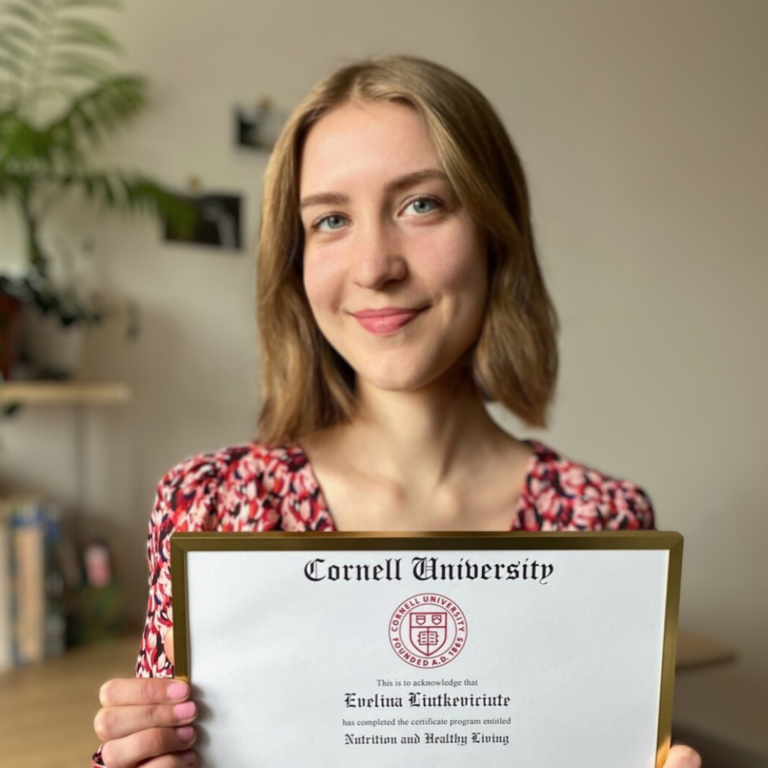
- Nutrition for Metabolic Health Certificate from Cornell’s College of Human Ecology
- 48 Professional Development Hours (4.8 CEUs)
- ABLMIBLM: Credits may be applied toward Maintenance of Certification (MOC) for the American Board of Lifestyle Medicine and the International Board of Lifestyle Medicine
Watch the Video
Who Should Enroll
- Dietitians
- Nutritionists
- Community and public health workers
- Health educators, coaches, and holistic providers
- Wellness coordinators, consultants, and nutrition program managers
- Sports medical professionals, including physical and occupational therapists, fitness trainers, and managers
- Social media influencers
- Science writers
- Anyone interested in personal wellness and living a healthier life
Frequently Asked Questions
Metabolic conditions like insulin resistance, hypertension, and dyslipidemia are increasingly common, and nutrition guidance can feel noisy and contradictory. Cornell’s Nutrition for Metabolic Health Certificate helps you cut through the confusion by focusing on the science of energy balance, obesity risk, and evidence-based dietary patterns that support metabolic resilience.
In this certificate program, authored by faculty from Cornell’s College of Human Ecology, you will gain practical frameworks for defining and assessing metabolic health, connecting body fat distribution and lifestyle factors to cardiometabolic risk, and selecting nutrition strategies that target common outcomes such as elevated triglycerides, LDL cholesterol, blood pressure, and fatty liver. You’ll also explore why people respond differently to the same diet and what precision nutrition can and cannot reliably do today.
You will learn with a small, expert-facilitated cohort and apply concepts through structured projects, discussions, and graded assignments designed for immediate real-world use.
If you want science-based clarity, practical tools to assess and improve metabolic health, and a structured learning experience with expert feedback and peer learning, you should choose Cornell’s Nutrition for Metabolic Health Certificate.
Many online nutrition courses are primarily content libraries: You watch videos, take quizzes, and move on. Cornell’s Nutrition for Metabolic Health Certificate is built to help you apply nutrition science to real decisions by combining faculty-designed curriculum with expert facilitation, graded projects, and small-cohort discussion.
Instead of learning metabolism as disconnected facts, you work from measurable definitions of metabolic health and connect them to practical levers you can influence. You will practice using common health indicators, evaluate the roles of energy intake and expenditure, and analyze how environment and genetics shape obesity risk and metabolic outcomes. From there, you’ll weigh evidence-based dietary strategies for cardiometabolic markers and examine what precision nutrition can realistically offer, including why individual responses vary.
Because the learning experience throughout Cornell’s Nutrition for Metabolic Health Certificate is cohort based and facilitator led, you receive feedback on your work and learn alongside a global group of professionals, so the material stays grounded in real life rather than staying theoretical.
Professionals and motivated learners who want a science-based, practical understanding of metabolic health are a strong fit for Cornell’s Nutrition for Metabolic Health Certificate.
You will get the most value from the Nutrition for Metabolic Health Certificate if you:
- Support others’ health decisions as a dietitian, nutritionist, health educator, coach, wellness coordinator, or community/public health professional
- Work in movement, rehab, or sports medicine settings and want clearer nutrition and metabolic-health context
- Communicate health information as a writer, educator, or content creator and want evidence-based frameworks
- Want to make informed decisions for your own wellness using measurable indicators and realistic lifestyle strategies
Cornell’s Nutrition for Metabolic Health Certificate is designed to be accessible without a formal application process, while still moving beyond surface-level advice into measurable definitions, real trade-offs, and evidence-based strategies.
Project work in Cornell’s Nutrition for Metabolic Health Certificate is designed to help you turn concepts into usable outputs you can apply to your own life or professional context. Across the program, you will complete multi-part, scaffolded assignments such as:
- Assessing health across multiple dimensions and then applying energy-balance concepts to build a realistic weight-loss strategy
- Evaluating metabolic health using five key biomarkers and a structured case analysis
- Mapping an “obesogenic” environment and analyzing how genetic and environmental factors interact in obesity risk
- Recommending improvements for a hypothetical metabolic-health scenario, integrating individual-level and collective-level approaches
- Designing a science-based diet plan that targets fat loss while staying practical, nutritionally adequate, and mindful of real-world constraints
- Applying dietary strategies to cases involving cardiometabolic markers such as triglycerides, LDL cholesterol, blood pressure, and fatty liver
- Surveying multiple people to illustrate why one-size-fits-all nutrition advice often fails and how individual variability affects outcomes
Throughout Cornell’s Nutrition for Metabolic Health Certificate program, projects like these are supported by discussions and facilitator feedback so you can refine your reasoning and communicate your recommendations more clearly.
Cornell’s Nutrition for Metabolic Health Certificate helps you strengthen your credibility and effectiveness in metabolic health and nutrition conversations by giving you evidence-based frameworks you can apply immediately.
After completing the Nutrition for Metabolic Health Certificate, you will be prepared to:
- Gain actionable nutritional recommendations to improve metabolic health through discussion of the underlying science
- Develop an understanding of the four key components of metabolic health and the five ways to best measure it
- Draw a correlation between obesity and the numerous negative health conditions caused by it
- Examine the collective vs. individual approach to combating obesity and consider what role, if any, the government should play
- Discover the latest research findings on the innovative concept of precision nutrition
Students commonly report finishing the Nutrition for Metabolic Health Certificate with clearer, more actionable ways to explain complex metabolism concepts, more confidence evaluating metabolic health and nutrition impact, and practical frameworks they can use with clients, communities, or within their organization. Learners also highlight that the case-based assignments reinforce real-world problem solving, the learning path feels cohesive, and detailed facilitator guidance helps them improve quickly, which can translate into stronger day-to-day performance in health education, coaching, wellness, and related roles.
What truly sets eCornell apart is how our programs unlock genuine career transformation. Learners earn promotions to senior positions, enjoy meaningful salary growth, build valuable professional networks, and navigate successful career transitions.
Cornell’s Nutrition for Metabolic Health Certificate, which consists of 3 short courses, is designed to be completed in 2 months. Each course runs for 2 weeks, with a typical weekly time commitment of 6 to 8 hours.
In practice, flexibility comes from a mix of asynchronous and interactive elements. You complete readings, videos, self-check activities, and project work on your schedule, and you have opportunities to participate in cohort discussions and live sessions that help you apply the concepts and learn from peers.
If you prefer to move faster, you can often compress your study time within each course window. If you need a steadier pace, the structured deadlines help you stay on track without requiring you to be online all day.
Students in Cornell's Nutrition for Metabolic Health Certificate commonly describe an experience that makes complex metabolism concepts feel clear, actionable, and immediately relevant to real life and work. They highlight how the program connects nutrition science to metabolic outcomes, helps them evaluate metabolic health more confidently, and leaves them with frameworks they can use for themselves, clients, or their organization.
Learners often point to these takeaways:
- Practical tools and frameworks for assessing metabolic health and nutrition impact
- Clear explanations that make metabolism easier to understand, even when topics are complex
- A deeper, more informed perspective on nutrition, health outcomes, and today’s metabolic challenges
- Assignments and case-based work that reinforce learning and build real-world problem-solving skills
- A well-organized learning path that feels cohesive from module to module
- A mix of videos, readings, self-checks, discussions, and projects that work together to strengthen retention
- Supportive, detailed facilitator guidance that helps learners improve quickly
- Convenient online format with a manageable pace that fits working schedules
- Content that feels current, relevant, and focused on what matters most
- A learning community that still feels collaborative, even in an online environment
Students also share that they finish the program feeling more confident discussing metabolic health topics, and they are likely to recommend the Nutrition for Metabolic Health Certificate to colleagues because it is both efficient and substantive.
A core outcome of Cornell’s Nutrition for Metabolic Health Certificate is learning how metabolic health is defined and assessed in practical settings. You will work with a clear framework built around common, real-world measurements that are often used to flag cardiometabolic risk.
You will learn how abdominal obesity, hypertension, insulin resistance, and dyslipidemia connect to five key fasting measurements commonly used in assessment:
- Waist circumference
- Blood pressure
- Fasting glucose
- Fasting triglycerides
- Fasting HDL cholesterol
You will also apply these markers in project work and case analysis so you can practice interpreting what the measurements suggest and what nutrition and lifestyle levers are most relevant.
A science or clinical license is not required to benefit from Cornell’s Nutrition for Metabolic Health Certificate. The curriculum is designed to guide you through the key concepts step by step, using plain-language explanations, examples, and applied assignments that help you translate nutrition science into practical decisions.
That said, you will spend time engaging with evidence-based ideas such as energy balance, insulin resistance, cardiometabolic biomarkers, and why diet responses vary across individuals. Comfort with basic health and nutrition terms, plus a willingness to work with numbers at a simple level (for example, calories and common lab values), will help you move through the material with confidence.
If you work in wellness, fitness, public health, or health communication, Cornell’s Nutrition for Metabolic Health Certificate can help you build a stronger scientific foundation for the guidance you share.
Cornell’s Nutrition for Metabolic Health Certificate is designed around application, so you can use what you learn immediately, whether your goal is personal wellness or better client support. Instead of focusing only on theory, you practice assessing health status, identifying which metabolic markers matter most, and selecting evidence-based nutrition strategies aligned to specific outcomes.
You will leave with practical approaches you can adapt to real constraints, such as:
- Using energy intake and expenditure concepts to set realistic fat-loss expectations
- Choosing dietary patterns and nutrition tactics that target triglycerides, LDL cholesterol, blood pressure, and fatty liver risk
- Evaluating popular claims and weight-loss myths against what the evidence actually supports
- Understanding why two people can follow the same plan and get different results, and how to think about personalization responsibly
This emphasis on measurable indicators and real-world trade-offs helps you move from generic advice to grounded recommendations.



Explore programs to meet your professional goals

- 2 to 6 months
- $2,000 to $10,000
- Online

- 2 to 4 weeks
- $299 to $1,199
- Online

- 3 hours
- $449
- Online

- 15 to 24 months part-time
- Tuition varies
- In person or online

- 2 to 5 days
- $3,000 to $10,000
- In person - Ithaca or NYC

- Custom Enterprise Programs
- Price varies
- In person or hybrid
Request Information Now by completing the form below.

Nutrition for Metabolic Health
| Select Payment Method | Cost |
|---|---|
| $2,750 | |